Last night, in anticipation of Veterans Day, Veterans for Peace reminded us that the holiday was originally Armistice Day, created as a “worldwide call for peace that was spurred by universal revulsion at the huge slaughter of World War I.”
But with Veterans Day, Veterans for Peace writes,
…honoring the warrior quickly morphed into honoring the military and glorifying war. Armistice Day was flipped from a day for peace into a day for displays of militarism. This November 11, it is as urgent as ever to ring the bells for peace. We must continue to press our government to end reckless military interventions that endanger the entire world. We must call for an end to war.
A year ago, the organization, founded in the 1980s after Reagan’s military interventions in Central America killed tens of thousands (see Chomsky, 9-11), called Veterans Day “a hyper-nationalistic worship ceremony for war.”
Perhaps this is why platitudes like “support our troops” and “honor the vets” are empty: Not all soldiers think the same way. Some come home and start preaching a very strange message, to which we must listen.
War, rather than protecting our freedoms, consistently works to destroy them
During American wars, citizens are spied on, censored, arrested, imprisoned, or killed by the government. Free speech and privacy are curtailed, opponents of the war vilified, and people of the same nationality, race, or religion of the “enemy” are demonized and persecuted, from the Japanese, who were called “yellow monkeys,” “cockroaches,” and “vermin” to Muslims and Arabs, called “towelheads,” “sand niggers,” and “goat fuckers.”
Critics of President John Adams were imprisoned under the Sedition Act during the undeclared naval war with France. Habeas corpus, your right to dispute an unlawful imprisonment, disappeared during the Civil War. 900 Americans were imprisoned under the Espionage Act for opposing World War I.
120,000 Americans were rounded up and put in concentration camps, as President Roosevelt called them, during World War II. The careers of people suspected of radical leftist leanings were destroyed during the McCarthy trials of the Cold War. Gravest of all, from colonial times to Vietnam, men were drafted–forced, under the threat of prison, to kill others in wars many opposed, conscientious objector status saving only a few (see A People’s History of the United States by Howard Zinn, a veteran).
In modern memory, President Bush’s “War on Terror” opened the door to the National Security Agency’s massive domestic spying program; the government recorded nearly 2 billion phone calls, text messages, and emails every day, and obtained personal records of citizens from libraries and universities.
Bush ensured that American citizens could be held indefinitely without charge, without a lawyer, without a trial, if the government labeled them an “enemy.” After 9/11, the government rounded up 5,000 people of Middle Eastern background, arresting 1,200. “Many with no link to terrorism were held for months, without either a formal charge or a public notice of their fate,” writes historian Eric Foner (Give Me Liberty!).
Under President Obama, American citizens could be imprisoned or assassinated anywhere on Earth without evidence or trial. Whistleblowers like Bradley Manning, who exposed U.S. war crimes in Iraq, were declared traitors and imprisoned. Edward Snowden, who exposed the Orwellian spying program, had to flee the country.
War is declared by people who will suffer least from the decision, and often in the interests of big business, not national security
Looking at U.S. history, it is safe to say wars don’t usually occur because politicians reluctantly yielded to massive pressure from the common people to use guns and bombs.
On the contrary, building popular support often took widespread propaganda, the relentless stoking of patriotic fervor, and sometimes cunning deceit, such as lies behind the Rio Grande affair that sparked the U.S.-Mexican War, the Gulf of Tonkin incident that justified the invasion of Vietnam, the West Berlin discotheque bombing falsely blamed on Libyans before we bombed them in 1986, and lies about weapons of mass destruction and an Iraqi link to 9/11 that launched the Second Gulf War (see Zinn, A People’s History; Chomsky, Hegemony or Survival, Hopes and Prospects, Imperial Ambitions, Understanding Power; Stone and Kruznick, The Untold History of the United States).
The decision to use the military is not a democratic one, not one made by the people. Jean-Paul Sartre put it best: “When the rich wage war, it’s the poor who die.” War is declared by the wealthy and powerful few (sometimes just the one, the president), and fought by the many, whether brave volunteers or bitter draftees. Those who declare the wars face no risk of death. Should not war be a decision all Americans make, as it is waged in their name?
If the decision was democratic, perhaps there would be fewer wars fought to serve corporate interests. Soldiers simply want to defend their country; the government is not so noble.
There is a reason the U.S. invaded Haiti in 1915: to force the nation to open land to American corporate use. There is a reason the U.S. overthrew the Guatemalan government in 1954: it was in the interests of the United Fruit Company. There is a reason the U.S. vies for geo-political control of the Middle East, a reason American oil companies like Baker Hughes and Halliburton (favored by top politicians like Vice President Dick Cheney, its former CEO) received contracts to rebuild the Iraqi oil industry, reaping billions from resources on foreign soil.
People die, but war is good for business.
Major General Smedley Butler, two-time winner of the Congressional Medal of Honor, remembered his time in the military serving the interests of corporations in his book, War is a Racket:
I spent 33 years and four months in active military service and during that period I spent most of my time as a high class muscle man for Big Business, for Wall Street and the bankers. In short, I was a racketeer, a gangster for capitalism. I helped make Mexico and especially Tampico safe for American oil interests in 1914. I helped make Haiti and Cuba a decent place for the National City Bank boys to collect revenues in. I helped in the raping of half a dozen Central American republics for the benefit of Wall Street.
I helped purify Nicaragua for the International Banking House of Brown Brothers in 1902-1912. I brought light to the Dominican Republic for the American sugar interests in 1916. I helped make Honduras right for the American fruit companies in 1903. In China in 1927 I helped see to it that Standard Oil went on its way unmolested.
It is no surprise corporate powers push for war. Beyond access to foreign resources and markets, companies that make guns, planes, ships, tanks, and bombs profit enormously from war spending, and pressure politicians to allocate billions for weapons even the military doesn’t want.
Mike Prysner, a U.S. soldier who fought in Iraq, called himself the “real terrorist” and the U.S. occupation the “real terrorism,” and said, “Our real enemies are not those living in a distant land whose names or policies we don’t understand; The real enemy is a system that wages war when it’s profitable…”
For over a century and across the globe, the U.S. government has overthrown democratically-elected governments, rigged elections, crushed people’s movements, assassinated leaders, installed, armed, and funded brutal dictators (Saddam Hussein included) and terror groups, and bombed, invaded, and occupied weaker nations, not to defend freedom or the homeland, but to protect American economic interests and global power. Millions died, and many victim countries fell into extreme poverty or civil wars from which they have yet to recover (see sources above for detailed histories).
War will kill innocent people
The only question is how many.
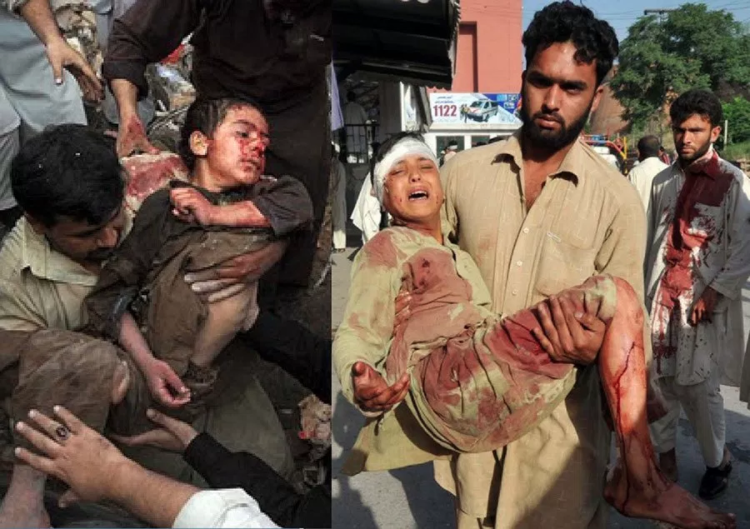
War will always destroy adults, children, and the elderly, and leave many more maimed, homeless, impoverished, and orphaned. The War on Terror killed over 1 million human beings. Is that justice for the 3,000 Americans who died on 9/11? Or an act of terror beyond all imagining? Unless we consider foreigners less worthy of life than Americans, shouldn’t we condemn the war as fiercely as we condemned Al-Qaeda’s horrific act?
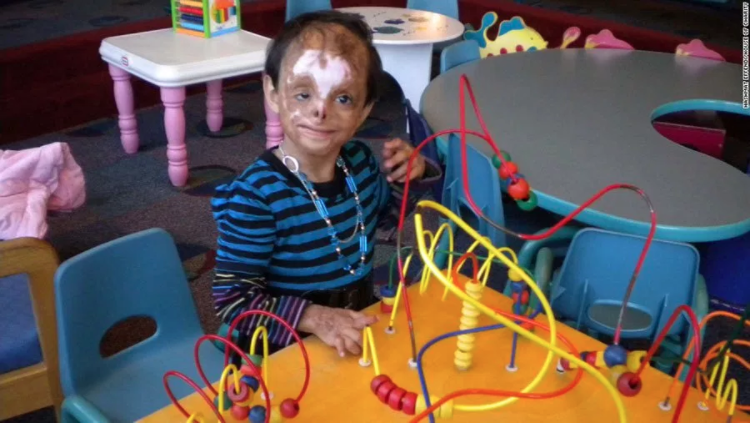
It is predictable that war will have horrific consequences, but what they will be specifically is unknown. Could you have predicted, as Ronald Takaki reported in A Different Mirror, that
When 2 million Afghan war refugees “trekked across the mountains into Pakistan, they were herded into crowded, dangerous, and disease-infested camps. In the midst of grinding poverty, many parents were forced to make their children work in brick and carpet-weaving factories where they were beaten, sexually abused, and given opium to stimulate them to work harder.”
Further, in war, people will be tortured, both innocent and guilty alike.
In 2003, Guantanamo Bay held nearly 700 men, age thirteen to ninety-eight, most given to the U.S. military for cash by “Afghan warlord militias and both Afghan and Pakistani bounty hunters,” but only 8 percent turned out to be Al-Qaeda. “Six hundred have been released, six convicted, and, according to the government, nine have died, most from suicide” (see Stone and Kuznick, The Untold History of the United States).
At Abu Ghraib prison in Iraq, suspects were beaten, electrocuted, attacked by dogs, and made to lie naked on other prisoners.
A 2014 Senate Intelligence Committee report found that at least 119 people, some innocent, were tortured during the Bush years in secret prisons—and failed to provide information leading to any high-level terrorists. The report
described in disturbing detail the mistreatment meted out by untrained CIA officers, some with histories of violence. The abuse included detainees being interrogated for days on end, hooded and dragged naked across floors while being beaten, threatened with death, deprived of sleep for up to a week, and subjected without medical reason to “rectal rehydration” and to “rectal feeding” with a puree of humus, raisins, nuts and pasta with sauce.
Others were nearly drowned (“waterboarded”), many were kept in coffin-sized boxes for days, some were told their mothers would be raped and killed, and at least two prisoners died—one from beatings, the other from hypothermia. High-level military officials have warned that such methods do not yield accurate information, and inspire individuals to join terror networks and participate in suicide bombings (see Chomsky, Hopes and Prospects).
Even our advanced technology cannot prevent civilian deaths. Despite the government’s assurances that drones limit collateral damage, for every one terrorist that dies by U.S. drone, nine innocent bystanders burn with him.
And if the widespread death and suffering of foreigners fails to give you pause, what of the effect of war on U.S. soldiers?
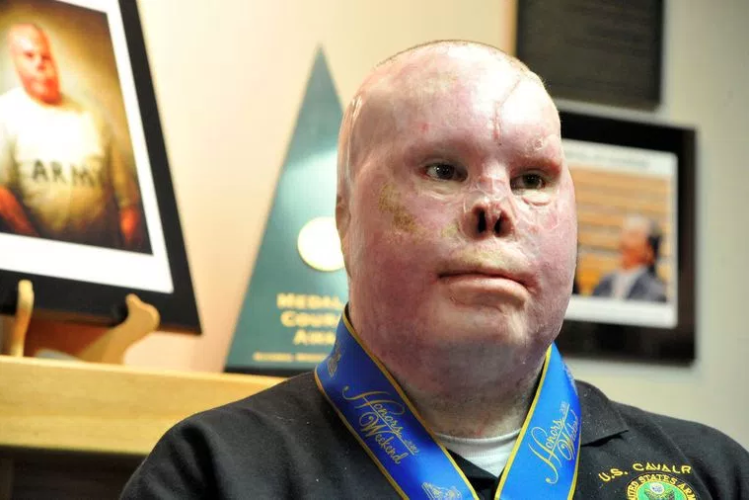
In the War on Terror, nearly 7,000 soldiers died. By 2015, nearly half a million were diagnosed with Post-Traumatic Stress Disorder or had a traumatic brain injury, with thousands of amputees, in a war that has lasted 14 years. Depression and suicide consume many.
True, they bravely volunteered, they knew the risks. But how many more need to be maimed or killed before Americans condemn war? Are the deaths of our children a fair price to pay for the deaths of foreign children?
One dying vet wrote to Bush and Cheney, “You may evade justice but in our eyes you are each guilty of egregious war crimes, of plunder and, finally, of murder, including the murder of thousands of young Americans — my fellow veterans — whose future you stole.”
War will lead to more war
According to both the U.S. military and Osama bin Laden himself, Al-Qaeda declared war on America because of U.S. military interventions in the Middle East, such as U.S. atrocities during wars in Lebanon and Somalia, the Gulf War of 1991 and the economic warfare that followed (which killed half a million Iraqi children under the age of 5), U.S. military bases in Saudi Arabia, and U.S. support for Israel.
So Al-Qaeda bombed the World Trade Center, a symbol of American global power, in 1993, killing six people. They did the same to the American embassies in Kenya and Tanzania in 1998, killing 200, mostly Africans. In 1999, they bombed the U.S.S. Cole in a port in Yemen, killing seventeen. And finally, in 2001, brought down the World Trade Center.
The U.S. responded with the very thing that began the cycle of violence, despite the pleas of some families of 9/11 victims. As documented by Zinn, a woman who lost her husband said:
I have heard angry rhetoric by some Americans, including many of our nation’s leaders, who advise a heavy dose of revenge and punishment. To those leaders, I would like to make clear that my family and I take no comfort in your words of rage. If you choose to respond to this incomprehensible brutality by perpetuating violence against other innocent human beings, you may not do so in the name of justice for my husband.
The U.S. invaded Afghanistan and Iraq, and sent drones into other nations. Relatives of victims founded 9/11 Families for Peaceful Tomorrows.
Predictably, nations that joined the U.S. invasion became bombing targets, like Spain in 2004 (191 killed) and Britain in 2007 (52 killed). In 2013, terrorists set off a bomb in Boston that killed three Americans. After France took a major role in bombing ISIS, the terror group killed 129 people in November 2015.
After predicting and even welcoming the rise of ISIS (and supporting extremists that later formed ISIS), the U.S. began bombing the barbaric terror group when it took over Syria and northern Iraq. ISIS publicly promised revenge.
After 14 years of the “War on Terror,” Al-Qaeda now inhabits a more massive geographic area, its numbers significant, reinforced by new members radicalized by the war, and global terror has increased fivefold.
U.S. officials have publicly acknowledged intervention breeds terrorism.
Perhaps the central problem is Americans accept terrible means as a way to achieve a noble end, but the end is never certain in war.
You may support ousting a murderous dictator or stopping genocide through force, but what happens when American troops or bombers exit, as they one day must, and the nation falls into sectarian violence, back into genocide, or under the control of another tyrant or a terrorist group like ISIS? Do we launch another war, another invasion, more bombs? That is endless war. Our intervention simply cannot solve the fundamental problems that lead to genocide, atrocities, civil war, and authoritarianism in many nations, such as extreme poverty, race hatred, religious hatred.
Intervention only puts blood on our hands the same as a dictator or terrorist, breeding enemies and revenge attacks, broadening violence, widening death to a scale a despot or terror group could only dream of. It bears repeating: the War on Terror took over 1 million lives.
That is the futility of war. By trying to prevent death, we are much more likely to cause more of it. By trying to keep people safe, we make them less so.
The use of the military has left us in an endless, and predictable, cycle of death and destruction.
As hard as it may be, it is wiser to refrain from violence, to embrace peace, diplomacy, and humanitarian aid, and encourage people living under despotic rulers to rise up on their own in revolution, as millions did in the Arab Spring starting in 2010, which toppled dictators across North Africa and the Middle East. Were the U.S. to stop supporting such dictators, this may happen more frequently, with more success.
Should one nation invade another, it must be the United Nations alone that decides, democratically, whether force is acceptable should diplomacy fail. This article does not argue against the use of force in all imaginable circumstances.
Ideally, the U.S. would no longer hold disproportionate power at the U.N., and the citizens of member nations would participate in an international vote on a proposed military response (also having the power to vote the war to an end at any point). Ideally, a U.N. force would be made up of soldiers and war machines, created only in times of need, from all member states, a tiny, equal offering from each nation forming a formidable army. Though the end of such a venture is still uncertain and innocent deaths likely, no longer would war be declared by the few, no longer would war serve the corporate and political interests of one nation, no longer would one rogue superpower be the target of revenge attacks. It would make torture, secrecy, and the erosion of civil liberties far less likely, especially if the international courts protected the rights of whistleblowers and prisoners, and if the press were guaranteed unlimited access to prisons and war zones.
World security is the world’s problem to solve, not one nation’s. In humanity’s quest to end war, that is a step in the right direction.
The Hope for Peace
There are nations that have no standing army, like Costa Rica, Panama, Iceland, Liechtenstein, and Haiti. Many others, such as Switzerland and Japan, have very limited forces, long unused. They don’t use force to preserve their global power or access to resources or markets on foreign soil. They do not attempt to police the globe.
Neither are they Al-Qaeda or ISIS targets. They do not live in fear of the next 9/11.
Many have personal freedoms and living standards that rival and even surpass the U.S.
America does not need to maintain nearly 1,000 military bases around the world, nor keep a military presence in 150 countries, nor support dictatorships like Saudi Arabia, nor launch bloody wars that kill millions, to be free, safe, and prosperous. Neither must we waste trillions. We currently devote over half our national budget to the military, $600 billion a year, while preserving some of the worst poverty and inequality, education and health care systems, and infant mortality rates in the advanced world.
Perhaps it is time to do the unthinkable: to close our bases, destroy our war machines, and disband our military.
War is not a solution to the fundamental causes of regional conflicts and oppression. But there are real long-term solutions: ending global poverty and hunger, eradicating disease, airdropping food, water, and medicine to democratic movements in totalitarian states, increasing education and literacy, opening our doors to all war refugees, promoting religious tolerance and the parting of church and state, retreating from the whole idea of nations, and creating an Earth that is one large country with one democratic government, of the human race, by the human race, for the human race.
These are monumental tasks. They take longer than launching a missile strike, but they will be more effective at ending war and saving lives in the long run.
After Al-Qaeda bombed American embassies in 1998, Vietnam veteran Robert Bowman said that the
…hatred we have sown has come back to haunt us in the form of terrorism…. Instead of sending our sons and daughters around the world to kill Arabs so we can have the oil under their sand, we should send them to rebuild their infrastructure, supply clean water, and feed starving children…. In short, we should do good instead of evil. Who would try to stop us? Who would hate us? Who would want to bomb us?
For more from the author, subscribe and follow or read his books.
