Football as Chess

Of all the sports, American football is most like chess.

(The other football is the most like dance.)

Look at a Sunday game and then at the chessboard.

The two teams in their light and dark, away and home.

Rows of pawns, offensive and defensive lines, charging each other — clash.

But these are heavier, slower pieces, just a square or two at a time.

The opposing sides are desperate to get to one key piece, the quarterback-king, who must stay well-defended. If he gets trapped that’s trouble.

What does the knight do but a quick out route? Tight end.

The rook with its go route, the bishop with its slant. Speedy receivers.

What if the rook played QB in college and did a quick castle? The king’s suddenly out wide, playing receiver.

After each play, a stop — time to tweak your strategy, thinking multiple moves ahead, and make the next play call. Adjust the board and your headset, because you’re the coach.

Make it to your opponent’s endzone with a pawn and score another queen!

At least that many football players don’t leave the field with injury.

Play football, risk brain damage. Play chess, risk madness?

For more from the author, subscribe and follow or read his books.

When to Stop Watching ‘The Walking Dead’

Mercifully, The Walking Dead came to an end in November 2022. Its final season was released for the masses on Netflix this month. Having trudged through the entire series, we can at last confirm that yes, we have wasted years of our lives.

(This article exists primarily for those who have not seen the show or are a few seasons in. There are a couple light spoilers for the part of the show you should watch, seasons 1-8 [oops, article spoiler!]. There are some heavier spoilers for the later seasons, but who cares — you shouldn’t watch them. Secondarily, the piece exists for those who have seen the entire thing and seek commiseration.)

Just over halfway through its 11-season run, The Walking Dead began a slow decline in quality from which it simply never recovered. The fatal blow was the loss of its main character Rick Grimes in season 9, when actor Andrew Lincoln departed. A show with a large cast of characters needs an anchor, someone to revolve around. One can perhaps better get away with a hundred characters if that was the nature of the show from the beginning, but TWD is disorienting because it has a main character for eight seasons and then none for the last three. It lost its center. (The comics did it right. The creator, Robert Kirkman, abruptly ended the series when Rick died, shocking fans and leaving the bamboozled distributor throwing out fake upcoming issue covers. See, readers experienced this world through Rick, and when he ended so did the experience. No one was safe in the dystopia, not Rick, not us. If only the show had been bold enough to do that.) Other key reasons for the descent from a solid hit to the okay-est show ever include the inevitable repetition (we have to find a new home again, we have to fight the next bad guy / group), the delightful slow burn’s eventual devolution into a miserable 45 minutes of nothingness that strongly suggested the showrunners had no idea how to wrap this thing up, and the creeping contrivances and character stupidity that is a hallmark of poor writing, as I wrote elsewhere:

Bad writing is when characters begin following the script, rather than the story being powered by the motivations of the characters… The characters’ wants, needs, decisions, actions, and abilities [should determine] the course of events — like in real life… Series that blast the story in a direction that requires characters, in out-of-character ways, to go along with it will always suffer… The Walking Dead, in addition to forgetting to have a main character after a while and in general overstaying its welcome, was eventually infected with this. (There’s no real reason for all the main characters to cram into an RV to get Maggie to medical care in season 6, leaving their town defenseless; but the writers wanted them to all be captured by Negan for an exciting who-did-he-kill cliffhanger. There’s no reason Carl doesn’t gun Negan down when he has the chance in season 7, as he planned to do, right after proving his grit by massacring Negan’s guards; but Negan is supposed to be in future episodes.)

While the derivative format and bad writing reared their ugly heads before it, “Wrath,” the final episode of season 8, is when one should say a firm goodbye to The Walking Dead. Finish the season and never look back. It’s not simply that things get worse after this — and they do — but “Wrath” actually does a decent job rounding off the show’s theme. What made TWD powerful was not only its compelling characters who you could lose at any time, its great action, gore, horror, and twists, but its question of how to hold onto your humanity when humanity has gone to hell. Do you maintain your decency and ethics, or do you survive? You cannot often have both. Characters struggle to remain good people. Some are mostly successful. For others, the struggle pulls them into madness. Some lose momentarily or entirely, in order to live, descending into a darkness and doing horrific things. Can our protagonists still be called good? We are asked this; the characters ask it of themselves. “Wrath” deals with this issue. Rick wants to return to who he was, to reclaim some of his humanity, and build a world where it can be restored for all. Other protagonists — who one loves just as much as one loves Rick — begin plotting to do awful things to an enemy in the next season. This is the episode’s mild cliffhanger, the attempt to draw you back for more. If you walk away from the show, you’ll have to give up on seeing where that story thread goes. Having seen such, I argue it’s not worth it. End the series there, knowing your heroes will continue fighting to survive in this zombie apocalypse for the rest of their lives, and at the same time fighting not to fall into savagery and evil. After season 8, this theme is increasingly forgotten, and you’d better believe that the show is no longer smart enough to include it in the actual conclusion.

Seasons 9 through 11 have their positives of course. Alpha and the Whisperers are kind of cool, there’s some good horror moments that keep the walkers dangerous, and Negan’s redemption arc is without question the most interesting element. But otherwise there’s not a lot to write home about. Beyond Rick vanishing and more nothing-to-see-here episodes, there are desperate, disorienting time jumps, a horde of new characters that aren’t particularly interesting (if you’ve seen these seasons, try to remember who Magna is, it’s impossible), and a season 11 villain / community, Pamela and the Commonwealth, that is the weakest of the series. Plus, since the Commonwealth is a large, safe city, our characters get to leave the terrifying apocalyptic tribulation and enter the pulse-pounding world of…local journalism, courtroom drama, and peaceful protests over inequality. The last episodes try to pull at your heartstrings with flashback footage from earlier episodes, when the show was actually good, but this also felt somewhat desperate to me and wasn’t terribly successful. And yes, Rick and Michonne appear at the very end, but it’s a nothing burger: they are precisely where we last saw them, with Rick a captive and Michonne searching for him. Just in case there’s a movie. The end. Besides those bits, this season could have been inserted earlier in the show and you would never have known it was designed to be the last one — it’s simply more of the same, another bad guy defeated. The “why” of it all was entirely beyond me. That’s what you tend to ask yourself after season 8. Why does this show exist? Why am I watching this? May this writing save you some valuable time.

For more from the author, subscribe and follow or read his books.

‘Obi-Wan Kenobi’ Is Peak Lazy Writing

The Obi-Wan Kenobi finale is out, and the show can be awarded a 6/10, perhaps 6.5. This is not a dreadful score, but it isn’t favorable either. I give abysmal films or shows with no redeeming qualities a 1 or 2, though this is extremely rare; bad or mediocre ones earn a 3-5; a 6 is watchable and even enjoyable but not that great, a 7 is a straight-up good production, an 8 is great, and a 9-10 is rare masterpiece or perfection territory. The ranking encompasses everything: was it an interesting, original, sensible story? Do you care about what happens to the characters, whether evil or heroic or neutral? Was the acting, music, pacing, special effects, cinematography, and editing competent? Was the dialogue intelligent or was it painful and cliché? Did they foolishly attempt a CGI human face? And so on.

Understanding anyone’s judgement of a Star Wars film or show requires knowing how it compares to the others, so consider the following rankings, which have changed here and there over the years but typically not by much. I judge A New Hope and The Empire Strikes Back to be 10s. Return of the Jedi earns a 9, primarily for the ridiculous “plan” to save Han Solo from Jabba the Hutt that involves everyone getting captured, and for recycling a destroy-the-Death-Star climax. The Mandalorian (seasons 1-2), The Force Awakens, and Solo hover at about 7 for me. Solo is often unpopular, but I think I enjoyed its original, small-scale, train-robbery Western kind of story, which preceded The Mandalorian. The Force Awakens created highly lovable characters, but lost most of its points for simply remaking A New Hope. Rogue One is a 6 (bland characters, save one droid), The Last Jedi (review here) is a 5, Revenge of the Sith a 4.5, and The Phantom Menace, Attack of the Clones, and The Rise of Skywalker earn 4s if I’m in a pleasant mood, usually 3.5s. It’s an odd feeling, giving roughly the same rank to the prequels and sequels. They’re both bad for such different reasons. The former had creative, new stories, and there’s a certain innocence about them — but mostly dismal dialogue, acting, and characters (Obi-Wan Kenobi was, in Episodes II and III, a welcome exception). The sequels, at least in the beginning, had highly likable characters, good lines, and solid acting, but were largely dull copy-pastes of the original films. One trilogy had good ideas and bad execution, the other bad ideas and competent execution. One can consult Red Letter Media and its hilarious Mr. Plinkett reviews of the prequels and sequels to fully understand why I find them so awful.

Kenobi was actually hovering at nearly a 7 for me until the end of episode three. Ewan McGregor, as always, is wonderful, little Leia is cute enough, Vader is hell-bent on revenge — here are characters we can care about. The pace was slow and thoughtful, a small-scale kidnapping/rescue story. If you could ignore the fact that Leia doesn’t seem to know Kenobi personally in A New Hope, and that a Vader-Kenobi showdown now somewhat undermines the importance of their fight in that film, things were as watchable and worthwhile as a Mandalorian episode. Some lines and acting weren’t perfect, but a plot was forming nicely. I have become increasingly burnt out of and bored by Star Wars, between the bad productions and it just having nothing new to say (rebels v. empire, Sith v. Jedi, blasters and lightsabers, over and over and over again), but maybe we’d have a 7 on our hands by the end.

Then the stupid awakened.

At the end of part three, Vader lights a big fire in the desert, and Force-pulls Kenobi through it. He then puts out the fire with the Force for some reason. Soon a woman and a droid rescue Kenobi by shooting into the fuel Vader had used, starting a slightly-bigger-fire between protagonist and antagonist. Vader is now helpless to stop the slow-moving droid from picking up Kenobi and lumbering away. He doesn’t walk around the fire (this would have taken five seconds, it’s truly not that big). He doesn’t put out the flames as he did before (I guess 30% more fire is just too much for him). He doesn’t Force-pull Kenobi back to him again. He just stares stupidly as the object of all his rage, who he obsessively wants to torture and kill, gets slowly carried off (we don’t actually see the departure, as that would have highlighted the absurdity; the show cuts).

This is astonishingly bad writing. It’s so bad one frantically tries to justify it. Oh, Vader let him escape, all part of the plan. This of course makes no sense (they’ve been looking for Kenobi for ten years, so him evading a second capture is a massive possibility; it’s established that Vader’s goal is to find him and enact revenge, not enjoy the thrill of the hunt; and it’s never hinted at before or confirmed later that this was intentional). The simpler explanation is probably the correct one: it’s just braindead scene construction. Vader and Kenobi have to be separated, after all. Otherwise Kenobi’s history and the show’s over. There’s a thousand better ways to rescue Kenobi here, but if you’re an idiot you won’t even think of them — of if you don’t care, and don’t respect the audience, you won’t bother. (It’s very much like in The Force Awakens when Rey and Kylo are dueling and the ground beneath them splits apart, as the planet is crumbling, creating a chasm that can conveniently stop the fight — only it’s a million times worse. Now, compare all this to Luke and Vader needing to be separated in Empire. Rather than being caught or killed, Luke lets go of the tower with the only hand he has left and chooses to fall to his death. That’s a good separation. It’s driven by a character with agency and morals. It’s not a convenient Act of God or a suddenly neutered character, someone who doesn’t do what he just did a minute ago for no reason.)

Bad writing is when characters begin following the script, rather than the story being powered by the motivations of the characters. Had the characters’ wants, needs, decisions, actions, and abilities determined the course of events — like in real life — Vader would have put out the flames a second time, he and his twenty stormtroopers would have easily handled one droid and one human rescuer, and Obi-Wan would have been toast. But I guess Disney gave Vader the script. “Oh, I can’t kill him now, there’s three more episodes of this thing, plus A New Hope.” So he stood there staring through the flames like an imbecile.

Anyone who doubts this was bad writing simply needs to continue watching the show. Because the eighth grader crafting the story continues to sacrifice character realism at the altar of the screenplay.

In episode five, Vader uses the Force to stop a transport in mid-air. He slams it on the ground and tears off its doors to get to Kenobi. But surprise, it was a decoy! A second transport right next to this one takes off and blasts away. Vader is dumbfounded. Why does he not use the Force to stop this one? “Well, it was like 40 meters farther away.” “Well, he was surprised, see. And they got out of there quick.” OK, I guess. All this time I thought Vader was supposed to be powerful. It’s crucial to have limits to Force powers, and all abilities, but this is a pretty fine line between doable and impossible. “I can run a mile, but 1.1 will fucking kill me.” It’s strange fanboys would wildly orgasm over Vader’s awesome power to wrench a ship from the air and then excuse his impotence. Either we’re seeing real fire-size and ship-distance challenges Vader can’t meet or the writing here is just sub-par. There are other, more realistic ways to get out of this jam. At least when Kenobi and Leia had to escape the bad guys in the prior episode, snow speeders came along and shot at the baddies (though don’t get me started on how three people fit into a snow speeder cockpit designed for one).

But that’s not even the worst of it. Minutes later two characters violate their motivations. In this episode, it is revealed Third Sister Reva is out to kill Vader, a smart twist and good character development. She attempts to assassinate him, but he runs her through with a lightsaber. Then the Grand Inquisitor, who Reva had run through in an earlier episode, appears. (How did he survive this? You think the show is going to bother to say? Of course it doesn’t. The writers don’t care. Alas, lightsabers suddenly seem far less intimidating.) Vader and the Grand Inquisitor decide to leave her “in the gutter.” They do not finish the kill, they simply walk away. Darth Vader, who snaps necks when you lose ships on radar or accidentally alert the enemy to your presence, doesn’t kill someone who tried to assassinate him! The Grand Inquisitor essentially was assassinated by Reva — wouldn’t he want some revenge for being stabbed through the stomach and out the spine with a lightsaber? “Oh, they’re just leaving her to die” — no. The Grand Inquisitor didn’t die, remember? He and Vader do, it just happened. To be kabobbed in this universe isn’t necessarily fatal (naturally, Reva survives, again without explanation). Is it all just a master plan to inspire Reva to go do or be something? Or is it bad writing, with Reva needing to be shown mercy by Sith types because she’s still in the show?

Happily, the Kenobi finale was strong. It was emotional and sweet, and earns a ranking similar to the first couple episodes. Consternation arose, of course, when Vader buries Kenobi under a mountain of rocks and then walks away! Wouldn’t you want to make sure he’s dead? Can’t you feel his presence when he’s close by and alive? Fortunately, this was not the end of their battle. Kenobi breaks out and attacks Vader. This time their separation makes sense given character traits — Kenobi wounds Vader and, being a good person who never wanted to kill his old apprentice, walks away. Similarly, Reva over on Tatooine tries to kill Luke (though it’s not fully clear why — she’s been left for dead by Vader, then finds out Luke and Obi-Wan have some sort of relationship, so she decides to kill the boy to…hurt Obi-Wan? Please Vader because she hurt Obi-Wan or killed a Force-sensitive child?) Luke escapes death not from some stupid deus ex machina or Reva acting insane. Though Reva appears to be untroubled by torturing Leia earlier on, a real missed opportunity by the filmmakers, we at least understand that as a youngling who was almost slaughtered by a Sith that she might hesitate to do the same to Luke.

In conclusion, series that blast the story in a direction that requires characters, in out-of-character ways, to go along with it will always suffer. As another example, The Walking Dead, in addition to forgetting to have a main character after a while and in general overstaying its welcome, was eventually infected with this. (There’s no real reason for all the main characters to cram into an RV to get Maggie to medical care in season 6, leaving their town defenseless; but the writers wanted them to all be captured by Negan for an exciting who-did-he-kill cliffhanger. There’s no reason Carl doesn’t gun Negan down when he has the chance in season 7, as he planned to do, right after proving his grit by massacring Negan’s guards; but Negan is supposed to be in future episodes.) Obviously, other Star Wars outings have terrible writing (and are worse overall productions), from Anakin and Padmé’s love confession dialogue or sand analysis in Attack of the Clones…to The Rise of Skywalker‘s convenient finding of McGuffins that conveniently reveal crucial information…to the creatively bankrupt plagiarism of the sequels. But I do not believe I have ever seen a show like Kenobi, one that puts heroes in a jam — a dramatic height, a climax — and so lazily and carelessly gets them out of it.

For more from the author, subscribe and follow or read his books.

‘The Last Jedi’ Review

Thoughts on The Last Jedi:

  1. SAME OL’, SAME OL’

I confess I’m quite baffled some people think The Last Jedi somehow “subverted expectations” and took Star Wars in some bold new direction. Most of it was a lazy copy-paste from the original trilogy, much like The Force Awakens. I get that’s intentional; it’s still bad.

Much of TLJ is a retreading of scenes from The Empire Strikes Back (and Return of the Jedi). The Luke character seeks training from the hermit-like Yoda character; the Luke character goes to a dark creepy cave and hallucinates; the Yoda character tells the Luke character not to go try to help save people; the Luke character and Vader character ride up the elevator to the Emperor character, where the Vader character kills the Emperor character to save the Luke character, of course after the Emperor character shows the Luke character the Rebel fleet being destroyed outside the window; literally Yoda teaches Luke stuff; the main characters escape from their base planet in a ship at the beginning and are pursued by the Empire’s fleet for much of the film; the Rebels hole up in trenches on the Hoth planet and are attacked by Imperial walkers. Worst of all, even much of the dialogue is ripped straight from the originals (“I feel the conflict within you”).

Don’t get me wrong, there were new, fresh elements. The depressed, disillusioned Jedi; Leia showing a new Force power, survival and movement in space; mutiny among the Rebels; Luke’s Force projection; a casino planet; hyperspace kamikaze. These were great ideas, for the most part executed really well (minus the first one, see below, and the fact the Rebels opened a door to space to let Leia in without all dying). But new stuff is something we should expect in movie series, and indeed each Star Wars film has new stuff. Unique elements being present shouldn’t be groundbreaking.    

So why else do people think it subverted expectations? Because Rey’s parents weren’t famous Jedi? Wowwww. Because the Darth Vader character killed the Emperor character in movie two instead of three? Woahhhh. Because we didn’t get a Snoke backstory and Luke doesn’t care about his old lightsaber and rich people fund both sides of the war? Slow clap. Maybe if you expected a higher-quality movie your expectations were subverted.

Think instead about all the ways the film could have betrayed expectations but did not. If Luke hadn’t been redeemed nor helped the good guys in the end; if Rey had taken Kylo’s hand, to either join him in building a new world without the war, try to turn him, or try to kill him later; if Finn hadn’t been saved by Rose, sacrificing a main character. I’m not necessarily advocating these things (except the one about Rey, absolutely), but just making a point about what really would have flipped the script, surprised us, shocked us. But of course Luke will be redeemed, Rey will fulfill her good gal role, and Finn won’t die. How dull.

  1. LUKE’S INANE THEORY

The idea of a depressed, hopeless, bitter Luke going searching for the first Jedi Temple at the edge of the universe was great. He’d failed as a Jedi master, lost all his students, and hadn’t stopped Kylo, his own nephew, from going evil. Luke is crushed and ashamed, plus is seeking answers to how things could have gone so badly for him, so he disappears. But those answers in the film make little sense, and TLJ misses a huge opportunity that will haunt me forever.

Luke explains to Rey that the Jedi need to end because they always end up training pupils that turn to the dark side. It happened to Darth Vader and Kylo. That’s the argument, that’s it. This sounds like an 8th grader’s idea. Sure, what Luke is saying is true, but it ignores important realities. A) Don’t the Jedi also do a lot of good that won’t get done without them? Do these positives truly get outweighed? B) More importantly, plenty of other big Sith baddies arise who were not trained by the Jedi. So if you shut down the Jedi, that won’t end the Sith. It’ll just let them take over everything. Which was basically happening. Luke can be depressed, but he shouldn’t be an imbecile.

What irks me is that, despite this being middle school-level thinking, it is actually so close to genius. Imagine if Luke actually found true Enlightenment. What if he’d begun suspecting, feeling in his heart, that something was wrong with the Force. What if he’d read the ancient texts and found a long-lost secret. Namely, that the more the Force is used the easier it is for more people to access (it grows stronger), and because the Force always balances itself, the only way to finally defeat the darkness is to let go of the light. Thus, end the Jedi, shut yourself off from the Force, and so on, which would inevitably lead to Kylo’s death, Snoke’s death, a weakening of the Force and the start of a new era without it. (The era doesn’t have to last, Disney has more movies to make, but it’s an interesting story for this trilogy.)

(This would explain why Rey, and the random kid with the broom on the casino planet, are so powerful and use the Force easily, without any training — the dark side’s growing, so more people can more easily access the Force, and the “light rises to meet” the darkness.)

Rey could have come to see this wisdom. She would have resisted at first, but her arc throughout the movie could have been to end up thinking as Luke did, and thus would have taken Kylo’s hand in hopes of convincing him too. Episode 9 would have been that struggle, and eventually Kylo would either come to agree or have to be killed; either way the trilogy ends with Rey being selfless, giving up any idea of becoming a Jedi, letting go of the Force, and as a result helping end the dark side and the Sith. That would have been a bold new direction, unique. (But no, Episode 9 will probably be good v. evil, where good wins, per usual.)

Luke could have either gone against what he’d learned to save Leia and the others as TLJ envisioned, leaving Rey to clean up the mess and get things back on track, or stuck to his guns, his Enlightenment, perhaps by physically going to the salt planet to stall for time, save the Rebels, and sacrifice himself, but not using the Force.

  1. THROW AWAY CHARACTERS & PLOTS

Like a lot of action films too timid to kill main characters, TLJ creates a throwaway character to fulfill the needs of a plot with a cool hyperspace kamikaze attack in it. This is Holdo, who we meet in TLJ and never really have a reason to care about. Thus her sacrifice has no emotional impact, and neither does the scene. Imagine if it had been Leia, or Po, or R2-D2, or literally anyone we had a relationship with. Even Akbar would have been better (instead he’s simply blown out the window and forgotten about early on).

Snoke is likewise a throw away character, even in The Force Awakens. He really serves no purpose in either movie, and really should never have existed. The plot needed Kylo to go evil, and no one could think of any other way to bring this about other than whipping up an Emperor 2.0 (the fact Kylo is blood related to Darth Vader, and curious about him, wasn’t enough apparently). We don’t know anything about Snoke, other than the one-dimensional trait of him being a bad guy wanting to, yawn, rule the galaxy, and thus we don’t care about him. He’s promptly murdered to take care of this issue. He’s pointless, and I think the creators realized it.

Another one is Phasma (literally just had to look up her name), who we saw for about 5 minutes in The Force Awakens. The creators seem to think that’s enough build-up to a big Finn-Phasma rivalry, animosity, and duel. Phasma dies and it’s hard to care.

Here is an appropriate place to include stupid cameos in the film. This may seem like splitting hairs, but so be it. Maz Kanata’s shoehorned appearance I didn’t mind too much, even though it felt like fan service or just a reminder that she exists. But I thought it wasn’t realistic to this world, and a lame attempt at humor, that she took a holo-phone call during a battle, and had prefered her as just an old bartender rather than a hero Rebel warrior. But no matter. Yoda’s cameo was the painful one. He looked awful, for some reason had reverted to the crazy act he played for an hour with Luke in The Empire Strikes Back, and his presence, for me, was just another reminder than Luke should have reached Enlightenment in this film, should have gained, painfully, the wisdom that would change everything. He shouldn’t have needed Yoda. Instead, Luke needs to learn another lesson from him. The Empire Strikes Back Again.

Rose isn’t a throw away character necessarily, but only exists to join in a throwaway plot. The journey to the casino planet, a location I find cool, simply made a long movie longer. It’s pretty clear the creators just wanted to give the Rebels, stuck on a ship being pursued, more to do. Thus, some Rebels sneak away to the casino world to find a hacker, and other Rebels stage a mutiny on the ship. Having both was really unnecessary. Imagine if Finn and Rose had simply joined in with Poe on his mutiny, and the film focused deeper and longer on the causes, planning, execution, and consequences of the mutiny. That would have cut out a pointless third plot. Then more time could have been spent on Rey and Luke, too, the main event.

This being said, Rose is sort of a shapeshifting character. She’s basically whatever the plot needs her to be in the moment. When we first meet her, she goes from heartbroken sister to fangirl Finn worshipper to badass Rebel guard in seconds, enough to give whiplash. The plot wants some low-quality CGI horse creatures to trample a casino, but wants it to have some emotional weight and justification, so Rose exists. Her home planet, we learn, was robbed to feed fat cats like those at the casinos, and she broadcasts what’s about to happen (cringe) when she says “I’d put my first through this place if I could.” Then, like magic, it happens! What a coincidence. (Between the cheesiness, spoilers, and bad CGI, this felt more like prequels-level stuff, as did BB-8’s operating a walker toward the end.) And of course, when Finn tries to sacrifice himself to save all the Rebels in the mountain, Rose becomes his lover, crashing into him to save him — presumably dooming all the Rebels. She says they had to “Save who we love”…uh, that’s what Finn was doing (and what she was certainly not doing, if she had any love for the other good guys). Before this moment, Rose seemed like a decent person who cared about the Rebels. But Finn needed saving. Thus now she’s the embodiment of selfishness, willing to let them all die, for a guy she met yesterday. I get that her sister died in battle and she doesn’t want to lose someone else, but we got zero indication she was capable of this monstrously unethical act (which the creators pass over like it’s nothing and will probably not address in the next film).                  

  1. FAILURE OF THE THEME OF FAILURE

While I don’t really think TLJ was sophisticated enough for themes, it’s supposedly all about failure. That’s the theme. Yoda says it. Failure’s the best teacher. That is always an interesting motif, but it’s not wholly accurate here. There’s less teaching and more just…lucking out.

True, lots of things go wrong for our characters. But, as my brother Sam pointed out, there’s no consequence to any failure. Seriously. Finn and Rose fail to find the hacker; it’s OK, another one happens to be in the cell they’re locked in. What a happy coincidence. Rey fails to be properly trained by Luke; no problem, she is still able to lift a mountain of rocks and save everyone in the end. Poe fails to follow orders, and his mutiny fails; he learns a lesson, but he’s never really punished. The Rebels fail to disable the bad guys’ tracker; it’s fine, a throw away character saves them all. Finn fails to sacrifice himself; it’s good, all the Rebels make it out of the mountain anyway.

“Inconsequential failure.” Great theme.

  1. REY AND CHARACTER DEVELOPMENT

I wish the creators had written better Rey-Luke dialogue and not left their relationship seeming so…underdeveloped. More broadly, Rey, our main character, doesn’t really have much of a character arc. That’s what makes stories interesting: when characters face struggles and change, for good or ill, because of them. Sure, Rey becomes more friendly with Kylo, which I liked (Reylo is absolutely how this trilogy should end; it would have been cooler in my version, where Kylo is convinced after much struggle to let go of the Force, but whatever). Sure, she gives up on getting Luke to come with her and goes to fight on her own. But are these quality arcs? Not really. Overall, she ends the movie where she began: a hero, fighting for righteousness, who is super strong with the Force despite no training. Her perceptions and beliefs and attitudes haven’t really changed. At least in The Force Awakens she lets go of staying behind on Jakku to await her family, accepting they are never coming back, freeing her to a life of adventure. That’s a big difference in her between the beginning and end of the film. Rey is our main character, our beloved hero. She needs an arc with substance.

Other characters get more. Luke is redeemed. Poe perhaps learns to not be such a hothead, to follow orders, because you may not have the full picture. Finn wants to run away and save himself at the start, then is willing to die for the Rebels in the end. Kylo has a slight arc, changing from someone who seeks Snoke’s approval and spars with Hux into a strongman who needs nor tolerates either. Not every character in a film needs a substantial arc, but the main one does. Rey is left out, and thus her story in TLJ isn’t as interesting as it might have been.

  1. DIALOGUE

Don’t let the brevity or position of this last point fool you: dialogue is a massive problem in this movie. Most lines are very poorly written, making them difficult to deliver even for decent actors, like when Luke explains why the Jedi have to end because they train future Sith. There are moments when characters literally sound as if they are reading off cue cards, offering a bland, stale, I-am-acting delivery, notably during one scene when Rey is asking for Luke’s help (for the third or fourth time) by Luke’s meditation rock. Many lines are cheesy, such as when Finn and Rose express their delight that they just destroyed the casino, and everything sounds like a cartoon. In action-adventure films like this, a little bit of cheesiness can make for some funny moments, but The Last Jedi, sadly, shows the peril of overdoing it.

For more from the author, subscribe and follow or read his books.

Even Better Than ‘Angels in the Outfield’

Remember the movie Angels in the Outfield? It’s the classic story of Roger, a foster kid who prays for God to help the Angels win the pennant so that his dad will come back. (Sounds like one truly twisted deal, but Roger’s dad wasn’t at all serious. If we’re being honest, Roger seems old enough to have known about figurative language.)

If your memory is as decrepit as the cheap VCR tape of this movie in the box in your basement, this image may help:

Screen Shot 2017-11-27 at 2.08.52 PM

Jesus, Roger looks uncomfortable in this picture. I don’t remember him being on the verge of tears in this scene. This looks like the beginning of an episode of Law and Order: SVU. CHUNG-CHUNG.

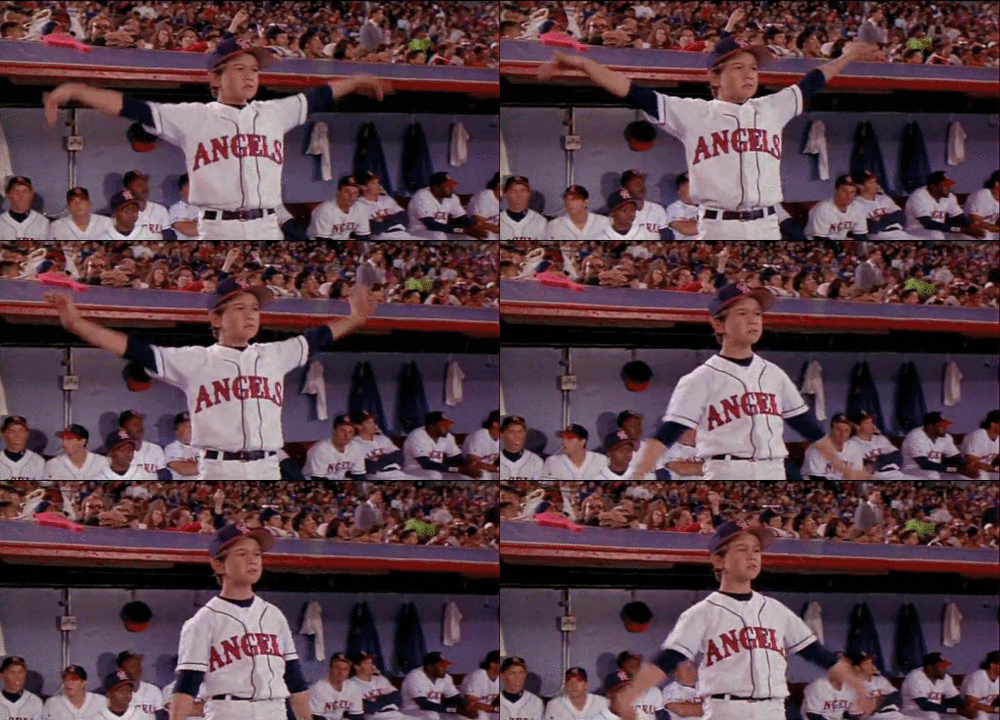
This is the scene in which Roger and his best buddy J. P. meet the indelibly cheerful Angels manager George Knox, who grows from skeptic to believer about the whole angels-playing-baseball thing (Roger is the only one that can see them). When Roger does see one, he’s like:

giphy

That’s where that hand motion comes from if you ever see people (me) doing this during a baseball game. The Royals once used the theme music to the movie when someone hit a home run, and I could never understand why I was the only one at Kauffman Stadium doing this while it played.

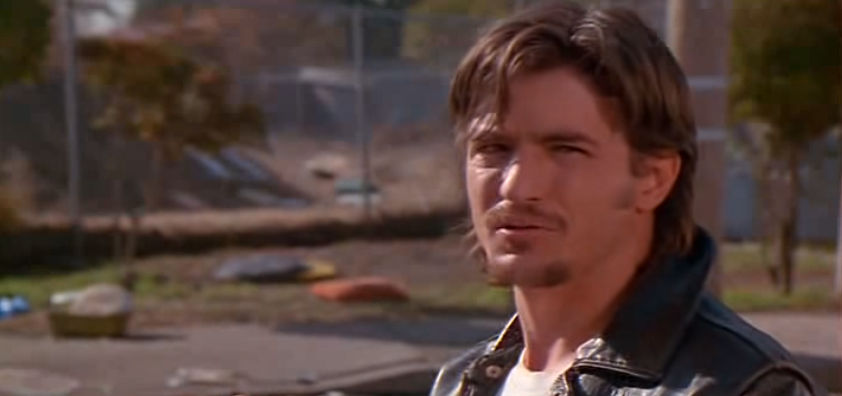
Also: That moment you realize Roger was played by Joseph Gordon-Levitt of 500 Days of SummerInception, and Dark Knight Rises.

2d274908031122-tease-joseph-gordonlevitt-today-19032015_f206664b5e962821f9652b05c637eb98

Angels in the Outfield is truly the greatest baseball movie of all time (bite me, Kevin Costner), therefore I in no way compare the Kansas City Royals to it casually. But without question, in every arena the Royals’ story rivals and surpasses Roger’s. This is such big news, I’m surprised more media attention hasn’t been paid to it.

KANSAS CITY’S PAIN IS GEORGE KNOX’S PAIN

fRLdWQO

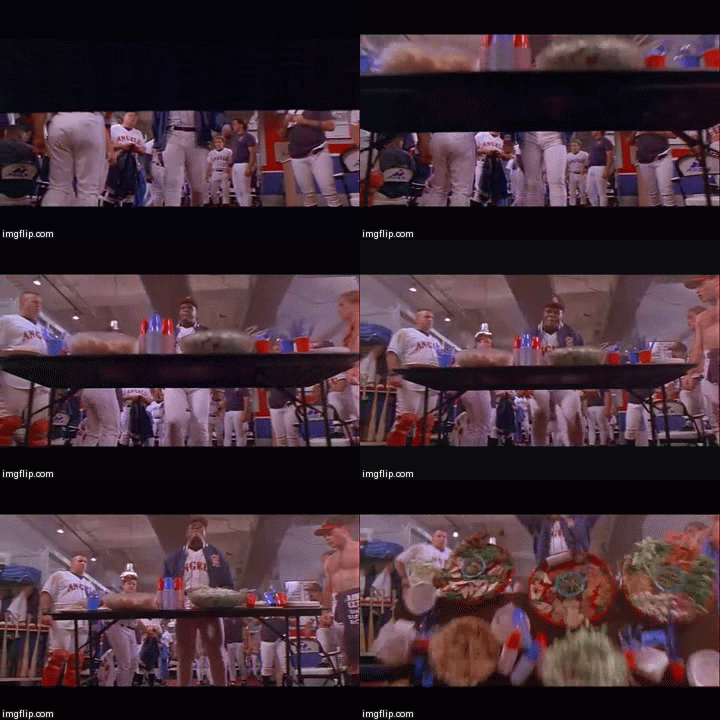
George Knox hates to lose. Can any clip better represent the boiling rage lurking beneath the skin of every Royals fan, just waiting to detonate, through all the miserable seasons of the past years, when Kansas City was the laughingstock of Major League Baseball?

A clip of a nuke wouldn’t suffice. It has to be George Knox marching through a locker room of two dozen half-naked losers and absolutely destroying their fruit and meat platters. That is the pain Royals fans felt after every season–no, every game–before the Royals’ meteoric rise.

And this is Knox after becoming manager rather recently. Multiply this rage by 29 years, and you’ll understand Kansas City’s agony. There’s no comparison.

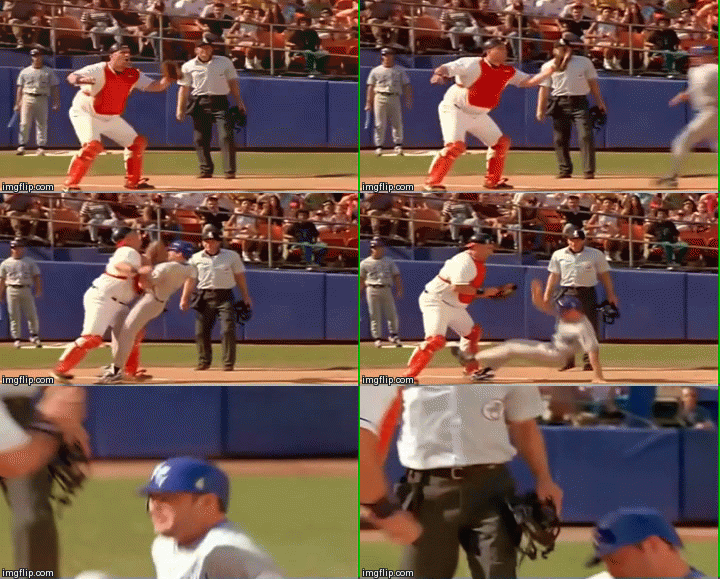
Even this bloody movie made us look like total twits. Why does this guy not slide? What is he doing?

82zqwaD

MIRACLES CAN HAPPEN

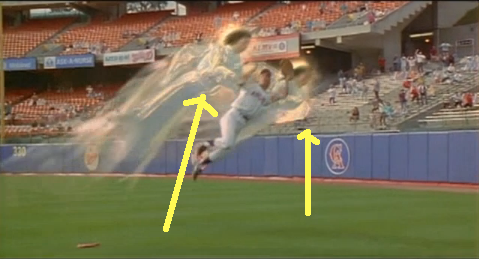
Roger’s story is fictional, with fictional managers, ballplayers, and angels. At least, I hope angels don’t look like this:

1445613876-cl

Honestly, this angel looks like either the uncle you pray to God won’t sit next to you at Thanksgiving or the aunt that’s visibly ready to call your favorite music the work of Satan before you even tell her what it is. Not really sure which one at this point.

But the Royals’ story?

This isn’t a movie. And no players appear to defy physics as an angel lifts them into the air. It’s simply incredible baseball. It’s real life. That’s an important reason the Royals’ story is better.

Eric-Hosmer-Kansas-City-Royals.png

Consider last year: Riding Jeremy Guthrie’s 7-inning shutout to beat the White Sox 3-1 on September 26, clinching their first playoff berth in 29 years. Four days later, staging a roaring comeback against the Oakland A’s in the do-or-die American League wild card game, down 3-7 but leveling the game in the 9th inning, eventually winning 9-8 in the 12th, after nearly 5 hours of play.

Sweeping both the American League division and championship series, earning the most consecutive wins in MLB postseason history. Making it to Game 7 of the World Series against the San Francisco Giants, but experiencing the most painful of defeats.

And this year: Winning their first American League Central title since 1985 on September 24 against the Mariners. On the brink of elimination in Game 4 of the AL division series against the Astros, down 4 runs in the 7th, and smashing in 5 runs in the 8th inning and piled on more in the 9th to win the game 9-6. They won the series in the next game.

Winning Game 6 of the AL championship series versus the Blue Jays by Lorenzo Cain scoring from first base on Eric Hosmer’s single, with closer Wade Davis shutting down the Blue Jay’s comeback threat, a runner on first and third.

And last night, Game 1 of the 2015 World Series, verses the New York Mets. Alcides Escobar’s inside-the-park homer, the first in the World Series since 1929, the year the Great Depression began. Winning 5-4 after 14 innings, the longest game in World Series history.

Could all this possibly be topped by the story of guys who only made it to the postseason with divine intervention in sparkling pajamas?

tumblr_inline_n270fiP3Sq1qa12tx

No. They’re cheaters.

Also, that’s Matthew McConaughey being picked up there. Swear to God. As he later said from the driver’s seat of a Lincoln, “Sometimes you’ve got to go back…”

Adrien Brody is also a ballplayer in this movie. McConaughey, Gordon-Levitt, Brody, Danny Glover, Tony Danza, Christopher Lloyd…seriously, is there anyone this film doesn’t have?

THE SMARMY SPORTSCASTER

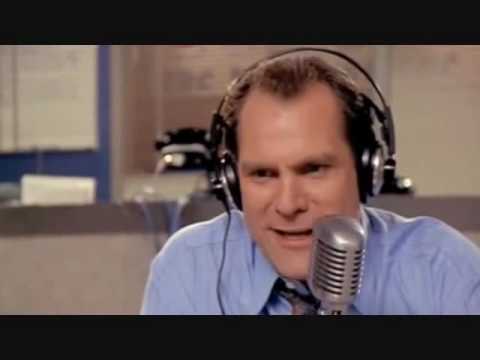
It has actor and concept art model for Mr. Incredible Jay O. Sanders. He plays Ranch Wilder.

Roger and George Knox had to deal with Ranch Wilder, the “voice of the Angels,” who makes it clear throughout the film he very much wants the Angels to lose. He hates George Knox, and is constantly being a Debbie Downer about the Angel’s postseason prospects.

hqdefault

Royals fans get Joe Buck.

ovc1zqgeabdkv7lqwscp

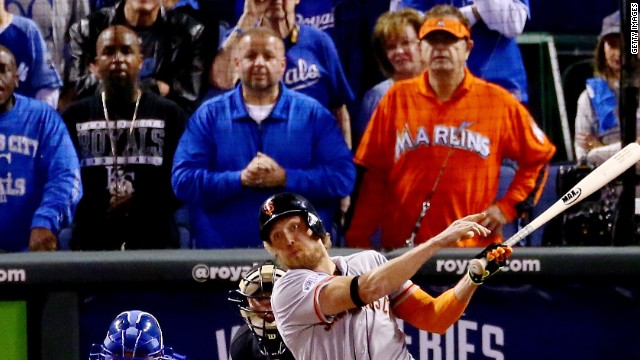
Buck took a lot of heat during the 2014 World Series for what Royals fans perceived to be bias, in support of the Giants…and one pitcher in particular.

Ranch Wilder got fired. Buck is still going strong, back to call this 2015 World Series.

This just makes a better story. No one really seemed to mind Ranch Wilder’s Angel-bashing in the film. He was only fired because he left his mic on when he really went berserk.

But Kansas City’s story has more conflict, more passion and intrigue. Buck is back, and a lot of KC fans are enraged, enough to start petitions and even call the games themselves.

THAT ONE FAN THAT GETS A LOT OF SCREEN TIME AND NO ONE KNOWS WHY

RadiantBelovedHamster-thumb360

Remember this guy? He’s that one fan in the crowd the movie focuses on, and likely the only human who has ever needed to professionally wax the sides of his neck.

He thinks Roger is crazy for seeing angels, he accidentally sits on Christopher Lloyd’s angel character, takes a baseball in the mouth, and at one point screams, “Hemmerling for Mitchell?! Go back to Cincinattiiiiiiii!” Classic quote.

Why is he always on screen? Why does he get so much attention? Why is that so obnoxious? In a way, he’s kind of the movie’s version of…of…

141024123919-marlins-man-01-story-top

Marlins Man.

This mysterious and no doubt totally loaded figure has been spotted behind home plate throughout this postseason and the one in 2014, and works his way to other sports championships as well.

Always on screen, he is the one fan that gets any attention. He gets national attention! Yes, he donates a ton of money to charities, but what of the other 37,000 people in the stands? What about their stories? He leaves them in the dust.

It’s all an intentional thing. He picks his seat so he can be on camera. He loves to rep his completely irrelevant team, which has hopefully fired its graphic design staff by now.

Because he’s desperate as a toddler for attention, I think he successfully one-ups the blowhard from Angels in the Outfield. And anyone who disagrees with me is, to quote J. P., a “Nacho Butt.”

PUSHING THROUGH THE LOSS OF A PARENT

As mentioned, Roger is a foster kid. About two-thirds into the movie, his deadbeat dad–the same one who said if the Angels won the pennant he and Roger could “be a family again”–abandons Roger for good.

“Sorry, boy,” Dad of the Year says as Roger rushes up to him, excited to tell him about how well the Angels are doing. Dad pats Roger on the cheek and walks away, leaving Roger to try to croak out “Where are you going?” before he begins to weep.

Screen Shot 2017-11-27 at 2.33.20 PM.png

If you’re a kid from a stable home watching this movie, it truly influences you, seeing someone your own age abandoned by his father. Not to mention Roger’s mother died, as did J. P.’s dad. Their stories are fictional, yet you know in the back of your mind while watching that millions of children experience abandonment, foster care, homelessness, or have parents deceased or in jail. The movie, unlike the vast majority of children’s films, makes you think about the suffering of others and how to persevere through pain.

And if a fictional story about this is powerful, how much more so is real life?

Sadly, three Royals lost a parent this season.

Mike Moustakas lost his mother Connie on August 9, while Chris Young lost his father Charles on September 26. As reported by The Kansas City Star, Young pitched the next day to honor his dad, and went 5 innings without giving up a hit.

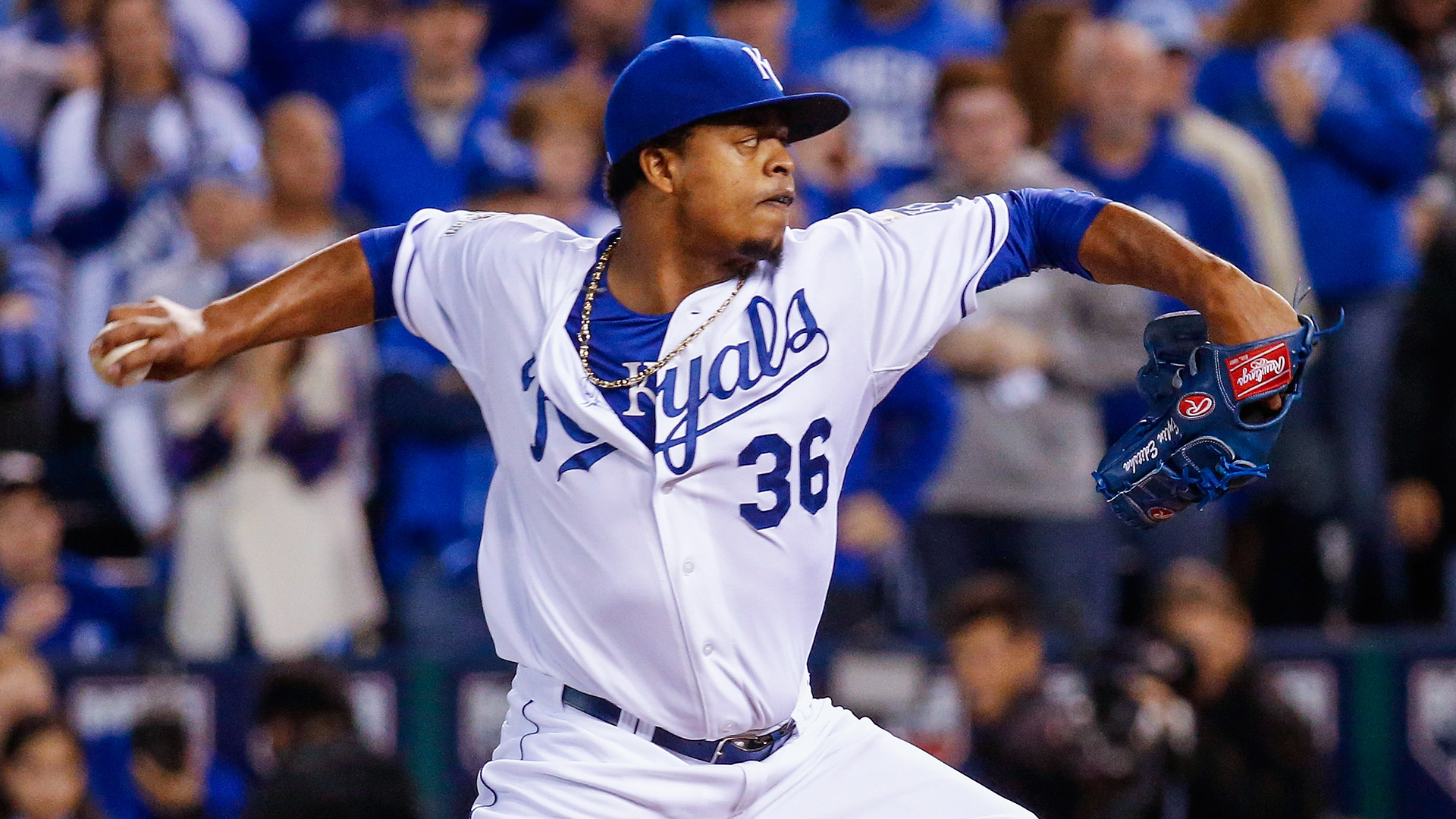
Edinson Volquez pitched last night, in Game 1 of the World Series. His father Daniel died just before the game, and Volquez’s family requested that Royals manager Ned Yost not tell Volquez until after he pitched.

edinson-volquez-101615-getty-ftrjpg_lvveh1cbrtd51uxuw0zocfv83

In other words, the world knew of Volquez’s father’s death before Volquez.

Through all this, the Royals have persevered. Moustakas said after the game, “For all the stuff that’s happened this year, to all of our parents…it has to bring you closer together.”

Eric Hosmer said, “It’s just another angel above, just watching us and behind us through this whole run.”

A HAPPY ENDING?

The Angels in the movie won the pennant (we’re kind of left to wonder about the World Series). Roger and his best friend J. P. get adopted by George Knox and live happily ever after.

I don’t know if Ned Yost will adopt any players, nor if the Royals will finally, after 3 decades, win it all. But there is one thing I know to be true, that applies to touching movies and real life alike:

“It could happen.”

ANGELS IN THE OUTFIELD, Milton Davis Jr., Danny Glover, Joseph Gordon-Levitt, 1994, (c)Buena Vista P

For more from the author, subscribe and follow or read his books.