Taylor Swift & Drake: 12 Bangers Each

Taylor Swift and Drake are, according to a recent piece in The New York Times, the only modern artists who have a chance to overtake The Beatles in popularity, though this remains a daunting task. They have without question defined their respective genres for a generation. Having recently crafted a playlist for a family member to introduce her to Drake, I thought I would pass it along here and create a similar selection of the Taylor Swift songs I most enjoy.

Drake is one of my favorite hip hop artists, alongside Lil Dicky and others who generally seem to be having the time of their lives, and he is certainly who I listen to the most in this genre. I decided to pick 12 songs, exemplifying a healthy mix of his styles, for the Drake Starter Kit. It’s a fun challenge to limit the selection.

And hopefully it generates some curiosity: what 12 Taylor Swift songs would this guy go for? I think my overall interest in Swift remains modest due to a preference for folk over pop (or country, though do see Begrudgingly Acknowledged Country Bangers). To me, much of her work feels a bit empty compared to, say, Una Walkenhorst or Dead Horses. Nevertheless, plenty of Swift songs absolutely slap. Taylor Swift Bangers features a dozen of my favorites. Skirting potential controversy, some songs are the originals. With art, there can be a certain magic and innocence to original creations that is hard to recapture later, and some of the content and spirit of her early work surely benefits from her youth. At other times, the more mature voice of Taylor’s Versions lends a new and beneficial gravitas to the song, a wiser and older woman looking back at something in the true distance (“All Too Well,” for example).

Enjoy.

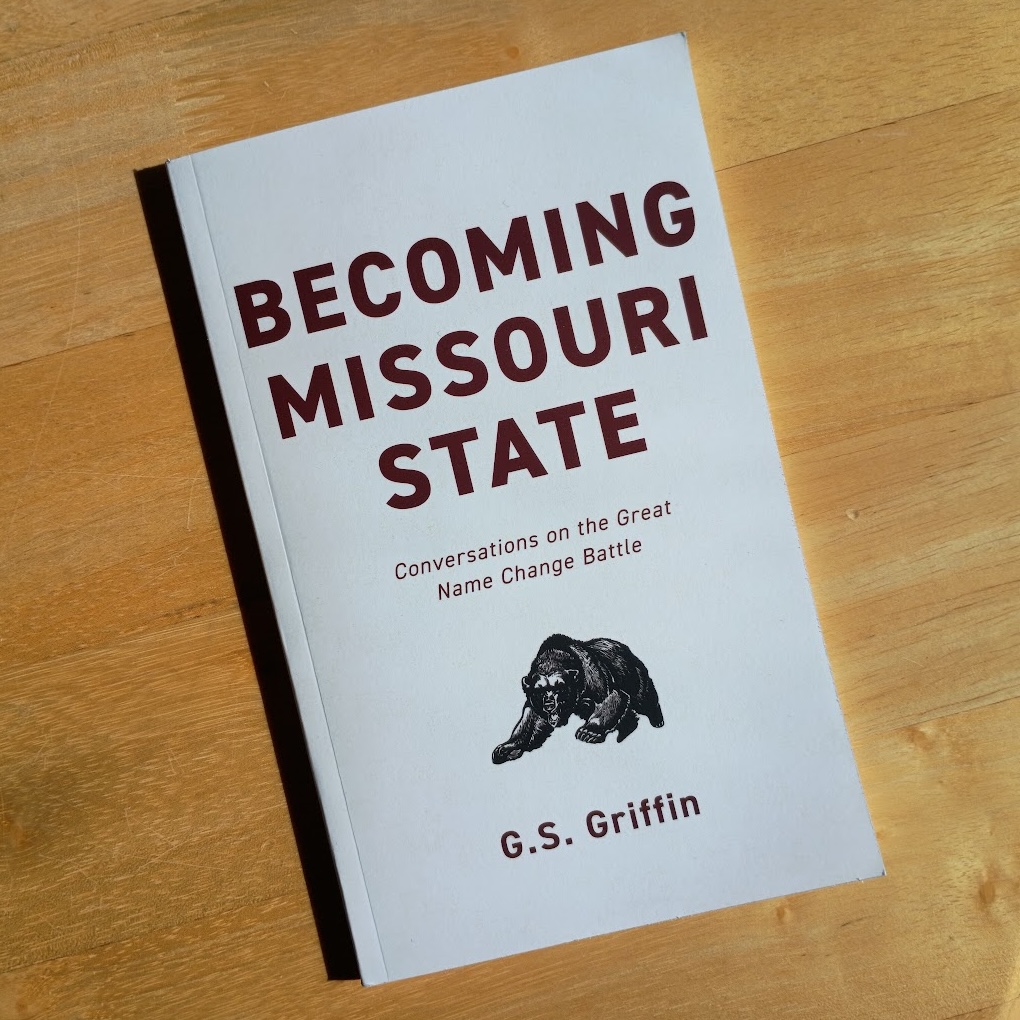
For more from the author, subscribe and follow or read his books.

Wokeness in November

Regardless of one’s personal feelings about wokeness and the culture wars (I think such things are important for many reasons, but have also spilt plenty of ink in critique), it seems likely they are one factor, out of many, holding back Democratic electoral success.

Some commentators have recently insisted that “The working class isn’t woke. That’s a huge problem for the left,” and that we need to recognize that the ideas of the “populist economic left” are popular but those of the “woke cultural left” are not. Perceptions that the Democrats are the crazy woke people may contribute (while not being the sole cause) to the fact that blue candidates will not garner votes even while progressive policies will — states that voted for Trump also voted for abortion rights, higher minimum wages, and so on.

The idea is to lean into bold leftwing policies that tangibly help ordinary people (which is the correct course of action when people are struggling and rightwing authoritarians and extremists are promising shelter) and lean away from what most of the country views as violations of common sense, unnecessary oversensitivity, language or thought policing, and so forth (let alone inaccuracies). People all over the political spectrum would love free healthcare or money deposited into their bank accounts by the State, but dislike getting beaten up for not using terms like Latinx. The Democrats are associated with the latter, not so much the former. And that’s trouble, because, conservatively, about 25% of independent voters and 10% of Democratic voters do not want a “woke” presidential candidate. Other research suggests that 58% of Democrats and 74% of independents are either concerned that politicians are too woke or are distracted from serious issues by wokeism. Some voters who have abandoned the Democrats will tell you directly they were tired of being told “how to talk,” with Democrats consistently “going too far.” They “lost touch with our priorities” and framed anyone who disagrees with wokeness as a “bad person.” A perceived focus on cultural issues rather than helping the middle class was the top reason swing voters chose Harris’ opponent.

There are those who saw Harris as properly progressive and having downplayed the culture war stuff, which is all debatable, but we’re talking about years-long, society-wide trends that are bigger than one campaign or candidate. Democrats would have to offer much more to help struggling people and work for some time to separate themselves from the woke Left, which is perceived as insane by too many badly needed voters.

To reiterate, an analysis of unfortunate effects and the perceptions of the masses can be acknowledged regardless of personal support for woke Left ideas. Sometimes the things you think are right hurt your electoral chances. Sometimes you’re the square peg being rammed into a round hole, at odds with most of the nation. Maybe Latinx is a better term, but 96% of Hispanics decline to use it. So you decide what hills are worth dying on; at times what’s right must be pursued regardless of electoral cost, while other things can be let go. Some woke battles are worth fighting, in my view, but if the larger culture war in any way helps hand the branches of government to the Republicans, it seems worth questioning. Many recent articles have screamed that the woke era had nothing to do with Harris’ loss, while others make it the main culprit — it seems reasonable to reject these absolutes, and most intellectually honest to say it is part of the story, and then consider how to act in response moving forward.

For more from the author, subscribe and follow or read his books.

Opium of the Munchkins: Religion and the Worker in ‘The Wizard of Oz’ and ‘Wicked’

In his 1843 “Critique of Hegel’s Philosophy of Right,” Karl Marx famously considered the relationship between religion and ordinary people’s struggle to survive under capitalism. Faith is “a protest against real suffering. Religion is the sigh of the oppressed creature, the heart of a heartless world, and the soul of soulless conditions. It is the opium of the people.”[1] Religion brings relief, in other words, to miserable workers and their families — think of promises of paradise, eternal life, or seeing lost loved ones again, as well as a sense of community, one’s squalid life being God’s will or even noble, and so on. Marx argues that poverty and class exploitation sustain comforting religions, and vice versa, rejecting both: one must fight “a condition that requires illusions.[2] Society must work toward “real happiness,” not “illusory happiness.”[3] When “man is the highest essence” there exists an “imperative to overthrow all relations in which man is a debased, enslaved” being; not so with religion.[4] Interestingly, Marx’s ideas come readily to mind while consuming classic works of popular culture full of commentary on both God and oppressed workers: L. Frank Baum’s The Wonderful Wizard of Oz (1900), Metro-Goldwyn-Mayer’s The Wizard of Oz (1939), and Gregory Maguire’s Wicked: The Life and Times of the Wicked Witch of the West (1995). Given that, according to cultural theorists, even fantasy texts “always present a particular image of the world,” this paper argues that these works frame America as a site of struggle between illusory happiness and attempts at real happiness.[5] That is, as a place where worker liberation is inhibited by consoling faith.

Others have interpreted L. Frank Baum’s narrative as an allegory for — or simply influenced by — the populist movement of the late nineteenth century, which saw farmers in the American heartland organize, forming associations and political parties, in response to economic hardships like crop failures, falling prices, and increasing debts. Farmers pushed for policies such as the expanded use of silver for currency, progressive taxation, the right to vote for U.S. senators, and nationalization of some industries. Dorothy’s silver shoes, which are magical and the key to her desired return to the family farm in Kansas, are judged representative and significant, for example.[6]

It is difficult to deny Baum’s interest in the plight of farmers. The Wonderful Wizard of Oz opens with two pages of agrarian misery. Dorothy, Uncle Henry, and Aunt Em live in a one-room home, surrounded by land that is nothing but a “gray mass, with little cracks running through it” from drought.[7] In the same way the sun and wind have ruined the earth, they have also drained Aunt Em, removed “the sparkle from her eyes and left them a sober gray; they had taken the red from her cheeks and lips, and they were gray also.”[8] She was thin as a rail and “never smiled,” in the same way Uncle Henry “never laughed.”[9] “He worked hard from morning till night and did not know what joy was. He was gray also…stern and solemn, and rarely spoke.”[10] Most disturbing is a possible description of prairie madness: with “not a tree nor a house” to break the monotonous landscape, and seemingly no other people around, Aunt Em “would scream and press her hand upon her heart” when she first heard Dorothy’s laughter, shocked that the little girl “could find anything to laugh at.”[11] This opening is significant, as there is little narrative reason why Aunt Em and Uncle Henry should live such dreadful lives — they play no real role in the tale. A dreary farm may provide a sharper contrast with and highlight the colorful, fantastical land of Oz, but the story would function just as well if Dorothy’s parental figures were happy and their home pleasant — perhaps better, as Dorothy is so determined to get back. Clearly, the author has something important to say — the reason is thematic, ideological. Baum is concerned for farmers of the Midwest, for their living conditions, their broken bodies and minds. Yet Dorothy’s love for and determination to return home suggests there is value there — the farm is a place worth treasuring, perhaps all the more so if it could be made anew, as it is after the tornado.[12]

Baum also seems interested in the abilities of ordinary people. Various observers have reasonably read the scarecrow, the tin woodman, and the cowardly lion as stand-ins for the common man. The characters famously seek, respectively, a brain, a heart, and courage. The scarecrow, being a tool of the farmer, is seen as representative of the farmer. (The tin woodman, losing body parts and perhaps his soul, may be the industrial worker.[13]) There is a moment just after the scarecrow is created when he feels he is “as good a man as anyone.”[14] A crow later tells the scarecrow, who is sad that he has failed in his duties and cannot keep birds away, “If you only had brains in your head you would be as good a man as any of them, and a better man than some of them.”[15] All this feels like rather pointed language, this comparison to other men. It is tempting to read this as the farmer is as good a man as any of them, though some say otherwise. Consider that Dorothy’s companions already possess that which they seek from the wizard. The scarecrow uses logical thinking to help the group cross a chasm safely, the tin woodman is so compassionate he cries over accidentally killing insects, and the lion bravely faces down monstrous beasts.[16] Then, at the end of the tale, the scarecrow is made ruler of Oz, the tin woodsman ruler of the Winkies, and the lion ruler of the beasts of the forest.[17] The supremacy of great wizards and witches comes to a close, and simple folk are crowned. The implication seems to be that we should question stereotypes concerning ordinary people and the self-doubts they create (the scarecrow thought he was an equal to others before the crow suggested he needed brains first, which he took to heart). The common man is not inadequate or inferior, but capable and worthy of determining his own destiny — whether through certain monetary policies and the direct election of senators, the overthrow of capitalism and establishment of the workers’ state, or some similar reading. 

We now turn to a second common interpretation of Baum’s text, and move towards synthesis. While the Wizard of Oz could be seen as the politician or capitalist oppressing the masses, his godlike qualities are more obvious. He is “wise,” “powerful,” and “good,” but may also grow “angry” and “destroy” the “dishonest” and “idle”; he is often called “great” and “terrible” in the same breath,[18] reflecting older visions of the Judeo-Christian deity that balanced righteousness with wrath. Oz appears in different forms, as gods often do, to each of the main characters.[19] “Few have ever dared ask to see his face,” the Emerald City gatekeeper tells Dorothy,[20] somewhat reminiscent of biblical declarations that none who look upon the face of God shall live. “I am everywhere,” Oz says plainly, “but to the eyes of common mortals I am invisible.”[21] “O Oz,” Dorothy says reverently.[22] Baum’s entire story could be judged an anti-religious text: four companions bring their desires (prayers, if you will: “I come to you praying that you will put brains in my head,” the scarecrow tells the wizard) to a powerful being who ends up being a man-made invention.[23] The wizard can only give the three locals (unneeded) facsimiles of what they seek, and fails to help Dorothy return to Kansas.[24]

It is here suggested that these interpretations cannot be parsed apart. If the farmer’s conditions are dire, if the characters position the farmer and other workers as intelligent, compassionate, and brave enough to wield power, and if Oz is representative of God, then narratively the workers have overthrown and replaced God. The companions expose the wizard as a fraud and rule in his stead; comforting, illusory religion has been overcome, and the working class has gained the power to control its own destiny, improving its conditions, pursuing real happiness in the here and now. The worker will now, to quote Marx, “think, act, and fashion his reality like a man who has discarded his illusions and regained his senses, so that he will move around himself as his own true Sun. Religion is only the illusory Sun which revolves around man as long as he does not revolve around himself.”[25] Man, not God, is the center of concerns. It is important to note that in the story the falsity is embraced while real suffering occurs. The wizard, despite being mysterious and frightening to the people of Oz, is revered: “the people remembered him lovingly” and “grieved over the loss of the Wonderful Wizard.”[26] (But, the wizard suggests, this is only because the masses did not discover his secret: “they would be vexed with me for having deceived them.”[27]) The people love their illusions. But the god figure is powerless to stop characters who are better stand-ins for capitalist oppressors, such as the Wicked Witch of the East, who “held all the Munchkins in bondage for many years, making them slave for her day and night.”[28] Dorothy must (accidentally) dispose of the evil witches.[29] The oppressed creatures love their god, but will receive no help in improving their circumstances from fictions. Their devotion sustains wizard rule and by extension a brutal status quo.

The 1939 film The Wizard of Oz can be read in the same way.[30] In fact, though its setting and consideration shift to a later American period, some class and religious elements are slightly reinforced (as is an Oz-U.S. connection, with characters existing in both realms). True, Dorothy’s caretakers are not as shattered and isolated as Baum’s versions. But the Kansas farm looks weathered by the Dust Bowl and Great Depression alike, and the drab sepia tone reflects the book’s obsession with gray. Ms. Gulch, who will become the Wicked Witch of the West in Dorothy’s dream, owns half the county, more closely tying witches to the ruling class. The subjugated Munchkins have Lollipop Guilds and Lullaby Leagues, reflecting workers’ unions. The wizard gives the scarecrow, tin man, and cowardly lion a college degree, philanthropic testimonial, and medal, saying that in the real world these are given to people with no more brains, heart, or courage than they have — a shot at society’s better-off, a cheer for common folk. Meanwhile, when Dorothy asks the gatekeeper at the Emerald City if he has ever seen the wizard and hears no in reply, she then asks how he knows there is one — a common question concerning faith. The scarecrow is still appointed ruler when Oz departs, to be assisted by the tin man and lion. 

Gregory Maguire’s Wicked continues the cultural work of its predecessors. With the wizard, the traditional god character, now cast as an authoritarian (and Elphaba, the Wicked Witch of the West, as a freedom fighter, if a morally complex one), there exists even more fertile ground to consider how religion inhibits worker freedom. To begin, the pleasure faith, which is all about fulfilment of base desires, clearly grows from and distracts from human miseries — similar to those of Kansas farmers (who get a nod with a description of Oz as “bankers against farmers and factories against shopkeepers”[31]). Frex, a unionist minister and Elphaba’s father, considers the people of Rush Margins: “Their lives were hard and their hopes few. As the drought dragged on, their traditional unionist faith was eroding,” replaced by “the so-called pleasure faith,” full of “spectacle and violence.”[32] It was all “individual freedom and amusement,” “sorcery,” “charms,” “sound and light displays,” and “hedonists.”[33] But perhaps followers of the pleasure faith and the familiar, monotheistic unionism (as well as tiktokism, Lurlinism, and other religions) are not so different. The atheistic Elphaba wonders:

Do you need religion as, say, the hippos in the Grasslands need the poisonous little parasites within them, to help them digest fiber and pulp? The history of peoples who have shucked off religion isn’t an especially persuasive argument for living without it. Is religion itself — that tired and ironic phrase — the necessary evil? The idea of religion worked for Nessarose, it worked for Frex. There may be no real city in the clouds, but dreaming of it can enliven the spirit.[34]

The opium of the people, the soul of soulless conditions, the “universal basis of consolation.”[35] For Elphaba, there is something “appealing” about the pagan Lurlinism, with “Lurlina in her fairy chariot, hovering just out of sight in the clouds, ready to swoop down some millennium or other…”[36] Perhaps the vague Unnamed God of unionism needs more “character” to be less “hollow,” bringing greater relief to the people as a more relatable, anthropomorphic fantasy: “Perhaps it’s time to name the Unnamed God, even feebly and in our own wicked image, that we may at least survive under the illusion of an authority that could care for us.”[37] Illusions, Elphaba sees, aid survival and give comfort.

But perhaps they also help maintain domination: the nonreligious Elphaba engages in resistance against the wizard, whereas Nessarose establishes her own unionist “religious tyranny” over Munchkinland and Frex is “feckless” in the face of authoritarianism, “reacting instead of acting, mourning the past and praying for the future instead of stirring up the present.”[38] Indeed, the people of Oz distracting themselves from the harsh realities of life with religion surely benefits the wizard, who rules with an iron fist and is of course responsible for many of these realities — the Quadlings suffer in mines, sentient Animals are stripped of their rights and become beasts of burden, and so on.[39] Faith stunts a coherent response to wretched conditions under a dictator and exploiter. This is suggested when an imprisoned cow tells Elphaba that many Animals tended to “draw a connection between the rise of tiktokism and the erosion of traditional Animal labor.”[40] The growing passions and diversions of religion occurred at the same time that oppression crushed workers. We know that the wizard desired the latter; if the former aids the latter, so too would the wizard desire it. In fact, it is easy to interpret the pleasure faith and its tiktok derivative as extensions or outgrowths of the wizard’s presence and will. The wizard himself is a spectacle, a sound and light display. Elphaba makes this connection when the tyrant takes the form of a skeleton: “The Wizard turned itself around, broke off its femurs, and pounded the seat of the throne as if it were a kettledrum. ‘Really, this is getting ridiculous, it’s all pleasure faith showbiz,’ said Elphaba.”[41] Further, Elphaba, likely the wizard’s daughter, was born in the Clock of the Time Dragon, the central pleasure faith artifact.[42] Perhaps the wizard birthed or fed these newer faiths, to turn the gaze of the masses away from his oppressive policies (“Who had engendered this Time Dragon, this fake oracle, this propaganda tool for wickedness,” wondered Frex. “Who…was benefiting?”[43]). Either way, the faiths serve this function.

For the scholar of history or culture, addressing the question of how creators saw and presented their societies has more to do with answering “What is the author interested in?” than demonstrating that a fantasy land like Oz is a neat allegory for the United States itself (even if a good case can be made). After all, one could find authorial, 1970s perspectives on capitalism and exploited workers in Alien without its setting (a ship, space) being a stand-in for a particular place. An allegorical setting is a bonus, but not necessary to do cultural work. All you need is interest, which offers to the consumer a specific image of the world. This paper argued that interest in the plight of ordinary people and how religion both soothes and prolongs it can be seen in Baum’s original work, the classic film, and Maguire’s reenvisioning. These texts are concerned with the exclusion of the common person from power. But this cannot be merely a general sentiment. This common person is inevitably American not solely thanks to an allegorical setting but, first, because the creators were Americans whose interests were shaped by the American world and whose offerings were made to the American public with its reaction in mind.

For more from the author, subscribe and follow or read his books.


[1] Karl Marx, “A Contribution to the Critique of Hegel’s Philosophy of Right,” Deutsch-Französische Jahrbücher, February 7, 1844. See the introduction. Retrieved from https://www.marxists.org/archive/marx/works/1843/critique-hpr/intro.htm.

[2] Ibid. 

[3] Ibid. 

[4] Ibid.

[5] John Storey, Cultural Theory and Popular Culture: An Introduction, 10th ed. (Abingdon, Oxfordshire: Routledge, 2024), 4.

[6] L. Frank Baum, The Wonderful Wizard of Oz (Orinda, CA: SeaWolf Press, 2019), 187-189.

[7] Ibid., 2-3.

[8] Ibid., 3. 

[9] Ibid.

[10] Ibid. 

[11] Ibid. 

[12] Ibid., 189-190. See also page 29.

[13] Ibid., 40-41. 

[14] Ibid., 31.

[15] Ibid., 31-32.

[16] Ibid., 49, 53-57.

[17] Ibid., 185-187. 

[18] Ibid., 84-85, 133.

[19] Ibid., 90-98.

[20] Ibid., 85.

[21] Ibid., 132.

[22] Ibid.

[23] Ibid., 94, 132-136.

[24] Ibid., 141-145, 149-150.

[25] Marx, “Critique.” See the introduction. 

[26] Baum, Wizard of Oz, 150. 

[27] Ibid., 148. 

[28] Ibid., 12.

[29] Ibid., 12, 112-113.

[30] The Wizard of Oz, directed by Victor Fleming (1939; Beverly Hills, CA; Metro-Goldwyn-Mayer).

[31] Gregory Maguire, Wicked: The Life and Times of the Wicked Witch of the West (New York, NY: HarperCollins, 1995), 158.

[32] Ibid., 13.

[33] Ibid., 41.

[34] Ibid., 387.

[35] Marx, “Critique.” See the introduction. 

[36] Maguire, Wicked, 388.

[37] Ibid., 387-388. 

[38] Ibid., 350, 319.

[39] Ibid., 194, 174, 317.

[40] Ibid., 317.

[41] Ibid., 176. 

[42] Ibid., 15-21, 374-375. 

[43] Ibid., 12.
Death of the Author — at the Hands of Cthulhu

In 1967, French literary theorist and philosopher Roland Barthes wrote of “The Death of the Author,” arguing that the meaning of a text is divorced from authorial intent and life influences — meaning is in flux, changing with each reader.[1] “We shall never know” motivations or “the writer’s interiority,” Barthes insists, it is only “language which speaks,” meaning “every text is eternally written here and now,” interpreted by today’s reader, full of empty enunciations without her.[2] Interestingly, this post-structuralist position has helped some individuals of the modern age reconcile their enjoyment of a work of art with their disdain for the artist, e.g. J.K. Rowling or R. Kelly. If it is the consumer who matters, it is easier to ignore vile things artists say or do, whether within texts or outside them. Readers of early twentieth-century horror writer H.P. Lovecraft may face similar struggles, as Lovecraft’s perceived anti-immigrant and racist narratives and language intrude upon, or are foundational to, highly engaging mysteries and terrors. (Here “perceived” is used not to question this interpretation, but to highlight the fact that a post-structuralist analysis would acknowledge “the destruction of every voice,” including Lovecraft’s, and the futility of seeking “ultimate meaning” and intent.[3] Future statements concerning Lovecraft’s racism have this caveat — the racism is found in the language through this reader’s interpretation. See footnote 31 for all concerns about contradiction.) Recent works — Victor LaValle’s The Ballad of Black Tom (2016) and Matt Ruff’s Lovecraft Country (2016) — have something to say about this tension. These creations reconcile Lovecraft’s racism with his popularity by adopting, through delightful metatextuality, a post-structuralist literary perspective, a recognition that meaning is constructed by others and that Lovecraft’s intentions are hardly the end of the story. These works are representative of Barthes’ thesis — at least, that is the meaning this reader observes, which of course will not be contradicted by creator intentions.[4] How can one appreciate Lovecraft’s tales despite their exercise of power against people of color? Remember, our recent texts seem to say, the author is dead. In other words, Lovecraft’s works are incomplete until we experience them, until we actively give them meaning.[5] Let us therefore complete them.

LaValle’s The Ballad of Black Tom is a retelling of Lovecraft’s 1927 “The Horror at Red Hook,” which closely associated immigrants and people of color with evil, crime, and decay.[6] “Persian devil-worshippers” and “squinting Orientals…swarmed” New York’s (nonfictional) Red Hook neighborhood, “a babel of sound and filth.”[7] There is “an Arab with a hatefully negroid mouth,” “mongrels” and “evil-looking strangers” who kidnap white children for human sacrifice, “vicious criminals” among the “slums and dark foreign faces.”[8] (For those who know Lovecraft but not this side of him: how ironic it is to find the truth, gain hidden knowledge, about Lovecraft and find a monster!) Robert Suydam, a white man, taps into their occult element to remain young and be resurrected upon his death. The Ballad of Black Tom subverts Lovecraft’s monstrification of “The Other,” making a monster out of Jazz Age racism. Tommy Tester, a black street musician and hustler, endures everything from suspicious white glances to the police murder of his father, prompting him to join and then replace Suydam in a mission to conjure the elder god Cthulhu to destroy and remake the world.[9] Importantly, this work features and gives voice to characters of color, humanizing the residents of Red Hook, Harlem, and elsewhere (without denying the presence of crime[10]). Suydam alone appears responsible for the sinister esotericism. Stories of white kidnapped children were racist rumors.[11]

The Ballad of Black Tom is a rather close reflection of Barthes’ theory, as it takes one of Lovecraft’s stories and reveals a hidden story beneath it (this is also a delicious twist on the hidden worlds and unrevealed truths found in many of Lovecraft’s tales). LaValle does not attempt to make the stories fit perfectly together — for instance, in “Red Hook”Detective Malone witnesses many things in the tenement basement, from “headless moon-calves” to the reanimation of Suydam’s corpse, that are absent from the tenement basement scene in Black Tom.[12] But Lovecraft’s story was abstract and light on narrative, leaving plenty of room to flesh out the story with new characters, perspectives, motivations, and events while preserving its overall structure. LaValle’s approach to “Red Hook” is to suggest that the horrors were misunderstood, a white and prejudiced perspective altering who was responsible for the occult, whether kidnappings occurred, what people of color were like, and so on. This is stated fairly directly when Tommy discovers he has misjudged a Caribbean immigrant establishment called the Victoria Society, finding not a “den of crime and sin” where the “worst criminals were too afraid to go” but rather a peaceful spot for cards, music, and dinner.[13] “Had Tommy simply assumed terrible things about this wave of West Indian immigrants?”[14] Seeing the truth was “like learning another world existed within — or alongside — the world he’d always known”; he had been “too ignorant to realize it.”[15] Black Tom likewise reveals the secret world behind “Red Hook.” On the one hand, here Lovecraft the Author is called out for his personal bigotry, for not discovering his own hidden worlds in early twentieth-century America. On the other hand, “Red Hook” is treated as if it exists on its own, outside the author, a post-structuralist framing — the story is incorrect, despite what its creator might say. (And despite what certain characters might say, those who LaValle notes misremember the tale.[16]) Lovecraft’s dreadful intentions, his story elements even, can be disregarded at will. LaValle read “Red Hook” and found new meaning, knowing silenced perspectives and hidden worlds were somewhere beneath the surface. He gave it new meaning, made it more complete with his own interpretation, perhaps helping to reconcile his “conflicted feelings” about Lovecraft, to quote his telling dedication. 

The metatextuality is in some ways different in Ruff’s Lovecraft Country, which contains creatures, objects, and so on from Lovecraft’s stories but is not a direct retelling à la LaValle. (Either way, one cannot help but think of Barthes’ depiction of a text as “a multi-dimensional space in which a variety of writings, none of them original, blend and clash. The text is a tissue of quotations drawn from the innumerable centres of culture.”[17]) In the world of Atticus Turner, a black veteran uncovering the mysteries of magic and confronting the monster[18] of 1950s American racism, Lovecraft existed and can be discussed directly. Atticus reads “The Call of Cthulhu” on the same night his father Montrose tells him he “did a little research on your friend Mr. Lovecraft.”[19] Atticus braces himself, knowing “something he enjoyed was about to be irrevocably spoiled,” and is handed a copy of Lovecraft’s 1912 poem “On the Creation of Niggers.”[20] Montrose does not believe his son should be reading Lovecraft, nor other problematic white authors.[21] Atticus resonates more with his uncle George. “I do love them,” George says of pulp stories of this nature, but one must “cherish their virtues and overlook their flaws… They do disappoint me sometimes… Sometimes, they stab me in the heart.”[22]“Overlook” is interesting word choice, especially in a book interested in confronting the bigotry of popular horror writers and the larger society. In any event, Atticus does not reject Lovecraft (his books appear among Atticus’ favorites and to-reads in the Braithwhite manor[23]), and continues to represent those who, despite conflicted feelings, enjoy his stories. Reconciliation, the text seems to suggest, is possible, acceptable.

While other observers have rightly noted that the frights and themes in Ruff’s text are not always particularly Lovecraftian, it is interesting to consider a world in which Lovecraft existed but so do the beasts and spells from his writings. Black Tom and Atticus (and companions) both use magic to confront racism, but the latter would be in a position to suspect that Lovecraft himself misunderstood the realities of “unheard-of powers.”[24] The Braithwhites and other white men of the Adamite Order of the Ancient Dawn are responsible for the sorcery, and Atticus’ power is derived directly from his white ancestor.[25] This is as far from Persian devil-worshippers, and the framing of people of color as Other, as one could get. Characters of color of course use incantations and powerful objects not for evil but for survival in Jim Crow America, such as when Atticus avoids death at the hands of the Order or when Ruby experiences freedom and opportunity after transforming into a white woman.[26] Lovecraft Country also has moments where Lovecraft’s monsters feel less like mindless forces of apocalyptic destruction and more like partisans. A shoggoth devours Sheriff Hunt and other racist policemen but seems to leave Atticus, George, and Letitia alone.[27] It seems a happy coincidence that a box with a tentacled creature meant to kill Hippolyta is opened by a white farmer who is harassing her; the farmer’s head is consumed.[28] And while Winthrop’s ghost at first tries to kill Letitia, it eventually plays board games with her and seemingly agrees to help protect her home from white vandals, dragging them “screaming into the darkness.”[29] Magic — who is responsible for it, how people of color use it, whether its creatures have sympathies or can be tamed — is clarified. Again, Lovecraft’s fictional stories can be judged to contain truths and untruths. The world they attempt to describe is bigger than them, exists outside of them — Atticus can come to understand it better than Lovecraft, as can Ruff, as can we. The Author is not God, the sole arbiter of truth over his own work.[30] Ruff reinterprets Lovecraft’s monsters and sorcerers, while at the same time suggesting we need not feel that we must throw out artists who stab us in the heart. These activities are connected, the former aiding the latter.

This paper argued, while working to avoid contradiction,[31] that The Ballad of Black Tom and Lovecraft Country address the tension between Lovecraft’s racism and enjoyment of his work by utilizing post-structuralist ideas, imparting new meaning to Lovecraft’s lore. The awfulness can be undermined by completing and clarifying the stories, rejecting authorial intent. Ruff and LaValle have unleashed Cthulhu to murder the Author. Lovecraft’s works need not be rejected, as they are fictions rife with errors — the reader can dig beneath the surface to find more accurate fictions. Hidden worlds abound, and not just for lay readers. In the future, scholars might explore strange intersections, or at least tantalizingly close parallels, between the ideas of Barthes and Lovecraft himself. At first one jests that Barthes’ text as a “tissue of signs,” an amalgamation of prior ideas, writings, and language, sounds monstrous, while the reader bringing “focus,” “unity,” and “meaning” to the “multiplicity” of signs sounds magical.[32] But then things grow a bit more serious, with Barthes declaring we should avoid seeking “secret” or “ultimate meaning” in a text and Lovecraft having his characters who discover hidden truths go raving mad.[33] A colleague of mine sees suspicion of intellectuals and academics in Lovecraft’s works, part of this warning against pursuing certain knowledge; Barthes, though an intellectual himself, seems unimpressed with the “Critic,” who supposes he has all the answers because he has discovered the Author.[34] And can we, somehow, compare the post-structuralist’s “anti-theological activity” — to “refuse to fix meaning” is to “refuse God” — with the nihilism and sense of cosmic indifference in the horror writer’s texts?[35] The works inspired by Lovecraft may not be the only ones worthy of a post-structuralist reading.

For more from the author, subscribe and follow or read his books.


[1] John Storey, Cultural Theory and Popular Culture, 5th ed. (Abingdon, Oxfordshire: Routledge, 2009), 126.

[2] Roland Barthes, “The Death of the Author,” in Music, Image, Text (London: Fontana, 1977), 142-148. Retrieved from https://sites.tufts.edu/english292b/files/2012/01/Barthes-The-Death-of-the-Author.pdf.

[3] Ibid., 142, 147.

[4] It is not claimed that a Barthesian framing is intentional. See footnote 31.

[5] Storey, Cultural Theory, 126.  

[6] H.P. Lovecraft, “The Horror at Red Hook,” Weird Tales vol. 9, no. 1 (January 1927): 59–73. Retrieved from https://www.hplovecraft.com/writings/texts/fiction/hrh.aspx.

[7] Ibid., parts 2, 3, 4.   

[8] Ibid., parts 3, 5, 6, 7. 

[9] Victor LaValle, The Ballad of Black Tom (New York: Tom Doherty Associates, 2016), 12-13, 60-66, 121-134. 

[10] Ibid., 73-74.

[11] Ibid., 136.

[12] Lovecraft, “Red Hook,” part 6. And LaValle, Black Tom, 119-134.

[13] LaValle, Black Tom, 15, 28-29. 

[14] Ibid., 29. 

[15] Ibid., 30. 

[16] In Black Tom, Detective Malone begins to misremember the climactic events; his memory begins to align with Lovecraft’s story. See pages 138-140: “Malone began to doubt his own memory of the villain known as Black Tom. Hadn’t it really been Robert Suydam all along who’d guided those awful forces?” Lovecraft’s story is wrong; it is the product of forgotten truths. The newspapers likewise err in their reports, delivering a “Red Hook” version of the tale.

[17] Barthes, “Death,” 146.

[18] Matt Ruff, Lovecraft Country (New York: Harper Perennial, 2016), 47-52 for example. On page 21, it is made clear a white sheriff is a “real monster.” 

[19] Ibid., 14.

[20] Ibid., 14-15.

[21] Ibid., 12.

[22] Ibid., 13. 

[23] Ibid., 65. 

[24] Lovecraft, “Red Hook,” part 4. 

[25] Ruff, Lovecraft Country, 75, 79, 86-87. 

[26] Ibid., 102-103, 213-270, 369-370. 

[27] Ibid., 52-56.

[28] Ibid., 208-209. 

[29] Ibid., 129-130, 135, 137-141. 

[30] Barthes, “Death,” 146-147. 

[31] This paper may feel contradictory, but that is, hopefully, illusory. These points may offer some clarity.

    1) This paper assigns meaning to texts and declares that meaning to be “You can assign meaning to texts.” This is consistent. (This paper has a post-structuralist flair and claims these novels do as well.)

    2) To see a post-structuralist framing (or any framing) is not necessarily to claim this was the author’s intent. Perhaps it was, perhaps it was not. But here it is only observed meaning. It would indeed be quite a headache to argue intended meaning here (as the intended meaning would be that intended meaning is unimportant, cannot be known, and so on).

    3) “How can one say these works are countering Lovecraft’s racism with post-structuralist ideas if post-structuralism questions whether Lovecraft’s racism (authorial intent and character) can be found in the text in any absolute way?” This is not a contradiction. According to Barthes, the reader is the interpreter, the one who gives meaning. If the reader sees racism, racism is present. (Recall the caveat in the opening paragraph.) If she then sees an anti-racist response with a Barthesian bent in another text, that exists as well. Within the mind of the individual, this is consistent. The reader, as Barthes observed, brings unity (see page 148).

[32] Barthes, “Death,” 147-148.

[33] Barthes, “Death,” 147. And Lovecraft, “Red Hook,” part 1. See also H.P. Lovecraft, “Dagon,” The Vagrant no. 11 (November 1919): 23–29. Retrieved from https://www.hplovecraft.com/writings/texts/fiction/d.aspx. 

[34] See the school of economics, social clubs, and cafes where intellectuals and other “sinister men” might hang out in H.P. Lovecraft, “The Street,” The Wolverine no. 8 (December 1920): 2–12. Retrieved fromhttps://www.hplovecraft.com/writings/texts/fiction/s.aspx. Robert Suydam in “Red Hook” is a man of letters and a man of study, an “authority on mediaeval superstition.” See also Barthes, “Death,” 147.

[35] Barthes, “Death,” 147. LaValle comments on Lovecraftian indifference on pages 49, 66, and 148 to frame racism as worse than Cthulhu.

Parrots at the End of Democracy

In 2018, Steve Bannon, Donald Trump’s chief strategist, reportedly described his tactic of “flood[ing] the zone with shit” — pumping so much misinformation and nonsense into the media landscape that citizens trust serious news reports less and important stories get buried in the deluge. Conflicting stories and propaganda create a fog of confusion concerning what is true, siloing people into their own worlds, inhibiting a coherent response, thus helping a vile strongman get away with doing vile things.

Trump operates in a similar fashion individually. He is a real threat to democracy and the rule of law, but says and does so many absurd, awful things that one eventually grows numb to it all and begins to tune out. A dangerous effect. Another fog settles over the populace, with serious statements difficult to parse from the ocean of lunacy. When Trump speaks of serving for three terms or terminating the Constitution or being dictator for a day, is he trolling the libs and getting high off the attention, or expressing actual goals? (Not all will view his actions as fully clarifying.) When such statements exist alongside suggestions that bleach injections cure COVID, claims that windmill (energy turbine) noise causes cancer, and face-saving alterations of hurricane projection maps with a sharpie, is it harder for people to take them seriously? (Republicans certainly bend over backward to frame verbal threats to democracy as just more Trump silliness.) Does Trump, wittingly or not, flood the zone with so many distractions that his dangerous actions and true intentions make less of an impact, a boon to an authoritarian?

Such phenomena overwhelm the masses and ensure legitimate dangers are less noticeable in all the noise, and a recent, insidious third strain follows the same pattern. The mimetic variant has become increasingly obvious over the past four years. If Trump is accused of staging a coup, scheming to unlawfully remain in power after losing a free and fair election, the Right must respond with the laughable claim that Biden withdrawing from the 2024 election was a “coup.” If Trump interferes in an election, he must explicitly call the criminal charges against him (many for that very act) “election interference.” If Trump is a legitimate danger to democracy, no, the Democrats are the actual danger. Whatever crime you’re involved in, accuse the other side of the same, which serves to obscure the seriousness of your own actions by making all this look like standard, childish back-and-forth political name-calling. Flood the zone with shit; make accusations meaningless.

This furthers the construction of parallel worlds. As I wrote in War is Peace, Freedom is Slavery, Ending Democracy is Saving It, which took the clear and present dangers to the democratic functioning of our society and compared them to the ideas in Orwell’s 1984:

Authoritarianism appears to rely on parts of the populace living in parallel worlds…built on conspiracy theories and lies… One part of the population believes destroying democracy is saving it. That stealing an election prevents a stolen election. The armed mob that broke into the Capitol [and] the conservatives decrying mass voter fraud…believe democracy is in danger as sincerely as liberals (and moderates and sane conservatives). It must be protected from those cheating Democrats, fraudulent votes, bad voting machines. Their own reality.

Pumping nonsense into the news, spewing nonsense individually, parroting nonsensically to distract from and delegitimize real problems… These practices and lies build the fantasyland. Elsewhere, they spread a cloud of exhaustion, confusion, and meaninglessness. Both of these creations aid and enable strongmen. Democracy, it turns out, dies not in darkness, but in a well-fertilized zone.

For more from the author, subscribe and follow or read his books.